

For centuries, humanity has gazed at the stars, captivated by their beauty and driven to understand their secrets. Now, a new frontier in astronomical exploration is emerging, one that challenges our very understanding of planetary formation and distribution. Imagine worlds adrift, unbound by the gravitational embrace of a star – these are what we call rogue planets, celestial wanderers silently traversing the vastness of interstellar space. Their existence hints at complex cosmic processes, potentially revealing untold stories about how solar systems come into being and evolve. Measuring these elusive objects has long been an astronomical pipe dream, hampered by their inherent darkness and lack of a guiding sun to illuminate them. Recent groundbreaking research, however, is changing everything, providing us with unprecedented tools to finally quantify the population of these nomadic worlds. This breakthrough promises not only to refine our models of planetary system evolution but also to potentially reveal clues about the prevalence of life beyond Earth, as rogue planets might even harbor subsurface oceans kept warm by internal heat. The journey to map the void and understand these enigmatic wanderers has just begun, and what we’re discovering is truly reshaping our cosmic perspective.
The sheer scale of the universe makes it difficult to fathom how many rogue planets might exist – estimates range wildly from billions to trillions. Until recently, detecting them was akin to searching for a needle in an impossibly large haystack, relying primarily on gravitational microlensing events that provide fleeting glimpses of their presence. Now, innovative techniques utilizing infrared observations and sophisticated data analysis are allowing scientists to directly detect the faint heat signatures radiating from these otherwise invisible bodies. This ability to measure the abundance and characteristics of rogue planets represents a monumental leap forward, opening up entirely new avenues for research into planetary formation, migration, and even the potential for habitability in environments far removed from traditional star systems.
What Are Rogue Planets?
Most of the planets we know about – like Earth, Mars, and Jupiter – orbit a star, following predictable paths dictated by gravity. They’re part of a solar system, bathed in starlight and influenced by their host star’s pull. But imagine a planet that *doesn’t* have a star to call home. That’s what a rogue planet is: a planetary-mass object wandering through space, unbound to any particular star or stellar system.
These ‘free-floating’ planets, also known as interstellar planets, aren’t just lost; they’re essentially adrift in the vastness of the galaxy. They can be roughly similar in size and composition to planets within our own solar system – some are rocky like Earth, while others might be gas giants like Jupiter – but their journey is solitary and independent. It’s a lonely existence for a world without a sun.
So how do these planetary nomads come to exist? There are two main theories. Some rogue planets are ‘orphaned’ – ejected from young star systems during the chaotic gravitational dances that occur when multiple planets form. Think of it like a cosmic game of billiards where one planet gets knocked out of orbit and slingshotted into interstellar space. Others might actually form independently, coalescing from gas and dust clouds just as regular planets do around stars, but never developing a stellar host.
The existence of rogue planets has long been theorized, but detecting them – let alone measuring their mass and distance – is incredibly challenging due to the lack of starlight. Recent groundbreaking observations are finally allowing astronomers to begin characterizing these elusive wanderers, opening up exciting new avenues for understanding planet formation and the sheer abundance of planetary bodies in our galaxy.
Orphaned Worlds: The Formation & Ejection
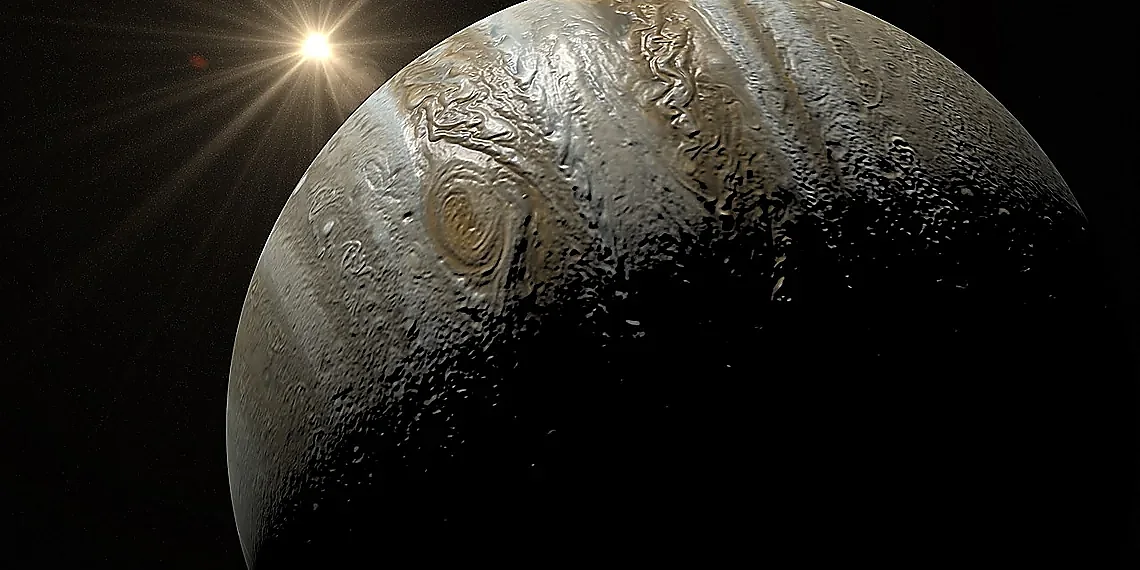
Rogue planets, also sometimes called free-floating planets, don’t orbit a star like Earth does around the Sun. They wander through interstellar space, completely untethered to any solar system. But how do these ‘orphaned worlds’ come to exist? There are two primary ways rogue planets form: they can be kicked out of existing planetary systems, or they can form independently in vast clouds of gas and dust.
Planetary ejection is a common scenario. During the chaotic early years of a star system’s formation, gravitational interactions between growing planets can become incredibly complex. A large planet’s gravity might fling smaller planets – or even larger ones – out into interstellar space. Think of it like a cosmic game of billiards; one collision sends another ball flying off in an unexpected direction. This process is particularly likely in systems with multiple giant planets, where gravitational tug-of-war can become intense.
Alternatively, rogue planets can form directly within massive molecular clouds – the same nurseries where stars are born. In these dense regions, gravity can occasionally clump together enough gas and dust to create a planet-sized object without needing a central star. These ‘nomad planets’ essentially form on their own, drifting through space like solitary islands in an ocean of darkness.
The Challenge of Measurement
Measuring rogue planets presents an extraordinary challenge to astronomers, largely because the very tools we’ve developed over centuries rely on one fundamental assumption: that celestial bodies orbit a central gravitational source – typically a star. Traditional methods for determining a planet’s mass and distance hinge on observing its orbital motion around this host star. We analyze the subtle wobble of the star caused by the planet’s gravity, or observe the dimming of starlight as the planet transits (passes in front of) its star. These techniques are exquisitely precise when dealing with planets within a solar system, but they become utterly useless for objects drifting through interstellar space, unbound to any star.
The absence of an orbit means there’s no periodic signal to track – no predictable dance between planet and star that allows us to calculate mass and distance. Imagine trying to determine the weight and location of a lost balloon floating in a vast, dark room; you can’t rely on observing its movement relative to a fixed point because it has none. Similarly, rogue planets are effectively isolated, their motion dictated by the complex gravitational influences of countless stars and other massive objects spread across the galaxy – an incredibly tangled web that is almost impossible to disentangle.
Furthermore, even if we could somehow account for all these subtle gravitational tugs, rogue planets are notoriously faint. They reflect very little starlight, making them difficult to detect in the first place. This low luminosity makes it exceptionally hard to accurately measure their physical properties. The techniques that astronomers have recently developed – such as using gravitational microlensing and observing thermal emissions – represent a significant leap forward, but they’re still incredibly complex and require painstaking analysis of subtle data signals.
The difficulty in measuring rogue planets isn’t just about the technical hurdles; it fundamentally challenges our understanding of planetary formation and evolution. Knowing their mass and distance allows us to test theories about how these planets are ejected from existing solar systems, providing invaluable insights into the dynamic processes shaping galaxies.
Beyond Orbit: Why Traditional Methods Fail

For centuries, astronomers have relied on observing orbital motion to understand celestial objects. Planets orbiting stars reveal their mass through subtle gravitational tugs – tiny wobbles in a star’s position or periodic dimming as a planet transits its face. These techniques are highly effective for planets within established stellar systems, allowing us to calculate their masses and distances with remarkable precision. However, these methods fundamentally break down when applied to rogue planets, which by definition do not orbit a star.
The absence of an orbital partner means there’s no gravitational dance to analyze. A rogue planet doesn’t cause its host star to wobble, nor does it periodically block the starlight – the telltale signs astronomers use for exoplanet detection and characterization. Without these observable effects, traditional measurement techniques become entirely useless. Determining a rogue planet’s mass and distance becomes an incredibly complex problem requiring fundamentally different approaches.
Consequently, measuring rogue planets has historically been akin to finding a needle in a cosmic haystack. Astronomers have had to resort to indirect methods, often relying on statistical inference or observing rare events like gravitational microlensing (where a rogue planet’s gravity briefly magnifies the light of a distant star). These techniques are challenging, require extensive observation time, and provide only approximate measurements – until recently.
Microlensing Reveals Secrets
Imagine space as a giant, dark screen. Most of the time, it’s empty, but occasionally, something massive passes in front of a distant star – like a cosmic magnifying glass. This phenomenon, called gravitational microlensing, happens because gravity bends light. Massive objects warp spacetime, causing light from stars behind them to bend around them and appear brighter for a short period. It’s an incredibly subtle effect, requiring precise measurements and keen observation, but it’s also revolutionary because it allows astronomers to detect things that would otherwise be invisible – like rogue planets.
Rogue planets, as they are called, are essentially planets that have been ejected from their star systems and wander through interstellar space. They don’t orbit a sun, so traditional planet-hunting methods relying on observing orbital wobbles or transits (when a planet passes in front of its star) simply won’t work. Microlensing provides an ingenious solution: When a rogue planet acts as the magnifying glass for a distant star, it creates a tiny, additional spike in brightness *on top* of the main microlensing event caused by another, typically larger, object like a star. This extra spike reveals the presence and mass of the wandering planet.
Think of it like this: imagine looking at a candle through ripples in a pond. The ripples distort the candlelight, making it appear brighter and shifted slightly. If a small pebble suddenly passes between you and the candle, causing another, smaller ripple, that’s analogous to a rogue planet’s microlensing effect. By carefully analyzing the shape and duration of these spikes in brightness – how quickly they rise and fall – scientists can deduce the mass of the rogue planet. Furthermore, the time it takes for this spike to appear also gives clues about its distance from Earth.
The beauty of microlensing is that it’s a ‘blind’ technique; we don’t need to know anything about the rogue planet beforehand. It simply needs to pass between us and a distant star. This has opened up an entirely new window into understanding these lonely wanderers, allowing astronomers to estimate their abundance in our galaxy and learn more about how planetary systems form and evolve – some planets just aren’t meant to stay home.
Gravitational Magnification: How Microlensing Works
Imagine holding a magnifying glass up to a distant light source, like a star. If you move the magnifying glass slightly, the light appears brighter momentarily – that’s essentially what gravitational microlensing is all about. Massive objects, even planets, warp spacetime around them due to their gravity. When a massive object passes directly between us and a more distant star, its gravity bends the starlight, acting like our magnifying glass. This bending causes the background star to appear temporarily brighter and larger than usual.
The key is that the way the light bends and brightens reveals information about the intervening object’s mass. A bigger, heavier object creates a stronger gravitational ‘lens,’ causing a more dramatic brightening effect. By precisely measuring how much the background star’s brightness changes over time – its ‘microlensing curve’ – astronomers can calculate the mass of the lensing object. This is especially powerful because it allows us to detect objects that don’t emit their own light, like rogue planets.
Historically, detecting rogue planets has been incredibly difficult; they are essentially invisible unless they happen to pass directly in front of a background star. Microlensing provides a revolutionary way to find and characterize these elusive wanderers because it doesn’t rely on the planet emitting light. It’s akin to finding someone based solely on the shadow they cast – even if that person is completely dark, their presence can be inferred from how they affect the light around them. This technique opens up an entirely new window into understanding the prevalence and characteristics of planets adrift in interstellar space.
Implications for Exoplanet Research
The groundbreaking ability to directly measure the mass and distance of a rogue planet – a celestial body untethered to any star – has profound implications for how we understand planet formation itself. Current models often struggle to fully explain the ejection mechanisms that can fling planets out into interstellar space. These measurements provide crucial data points, allowing astronomers to refine these models and better understand the chaotic processes at play during planetary system development. We’re essentially gaining a new window into the turbulent early lives of planetary systems, observing the remnants of what might have been.
Historically, rogue planets were largely theoretical constructs, detected primarily through gravitational microlensing – an indirect method that offers limited insight into their properties. Now, with direct measurements available, we can test hypotheses about their composition and formation pathways more rigorously. Were they originally gas giants ejected from forming systems? Or smaller rocky planets that experienced a catastrophic orbital shift? The data gleaned from these observations will help differentiate between these possibilities and paint a clearer picture of the diverse origins of these wanderers.
Perhaps the most startling implication lies in the potential abundance of rogue planets within our galaxy. Some theories suggest they could vastly outnumber stars – an astonishing prospect that would fundamentally reshape our understanding of exoplanet demographics. If this is true, it implies that planet formation may be far more prevalent than we currently believe, with many planets simply failing to coalesce into stable planetary systems or being violently ejected during the process. This also suggests a massive hidden population of potential habitable worlds, albeit ones lacking the familiar warmth and light of a star.
Ultimately, studying rogue planets isn’t just about understanding their individual journeys; it’s about gaining a broader perspective on the prevalence of planets in the universe and refining our models for how these celestial bodies come into existence. As detection techniques improve and more measurements become available, we can anticipate even more surprising discoveries that will continue to challenge and reshape our view of planetary systems – both those tied to stars and those bravely wandering through the void.
A Universe Full of Wanderers?
Recent advances in gravitational microlensing have allowed astronomers to begin accurately measuring the masses and distances of rogue planets – those that do not orbit a star. These measurements suggest that rogue planets might be far more prevalent than previously imagined, potentially even outnumbering stars within our galaxy. Traditional planet formation models struggle to account for such vast numbers; if true, it implies a dramatically different picture of how planetary systems originate and evolve.
The sheer abundance of rogue planets has profound implications for exoplanet demographics. Our current understanding is largely based on detecting planets orbiting stars, leading to a potentially biased view of the overall planet population. If rogue planets dominate, our estimates of the number of planets in the galaxy could be significantly underestimated, and the characteristics we associate with ‘typical’ planets might need substantial revision.
Several theories attempt to explain the origin of these galactic wanderers. Some may have formed normally within planetary systems but were ejected due to gravitational interactions with other planets or a passing star. Others might form directly from collapsing gas clouds, similar to how stars are born, without ever being tied to a central sun. Further research and improved detection methods will be crucial to refine our understanding of rogue planet formation and their true prevalence in the universe.
The development of microlensing techniques, as detailed throughout this article, represents a monumental leap forward in our ability to detect and characterize previously invisible celestial bodies. We’ve moved beyond simply knowing these objects exist; now we can begin to quantify their prevalence and understand their distribution across the galaxy with unprecedented accuracy. This breakthrough fundamentally alters our understanding of planetary formation models, forcing us to reconsider how planets originate and evolve outside of traditional star systems. The sheer number of estimated free-floating worlds, including elusive rogue planets, hints at a vastly larger population than previously imagined, potentially reshaping our view of galactic demographics. Further refinement of these observational methods promises even more detailed insights into the composition and atmospheric properties of these fascinating wanderers. This is just the beginning; the era of characterizing the void has truly dawned, opening up exciting new avenues for exploration and discovery in exoplanet science. If you’re captivated by this glimpse into the unknown, we encourage you to delve deeper into related topics like transit photometry, radial velocity methods, and the search for biosignatures on potentially habitable worlds – the universe is brimming with wonders waiting to be uncovered.
Explore the fascinating world of exoplanet science further! Learn about different detection techniques, discover ongoing missions dedicated to finding new planets, and consider the implications these discoveries have for our understanding of life beyond Earth.
Continue reading on ByteTrending:
Discover more tech insights on ByteTrending ByteTrending.
Discover more from ByteTrending
Subscribe to get the latest posts sent to your email.