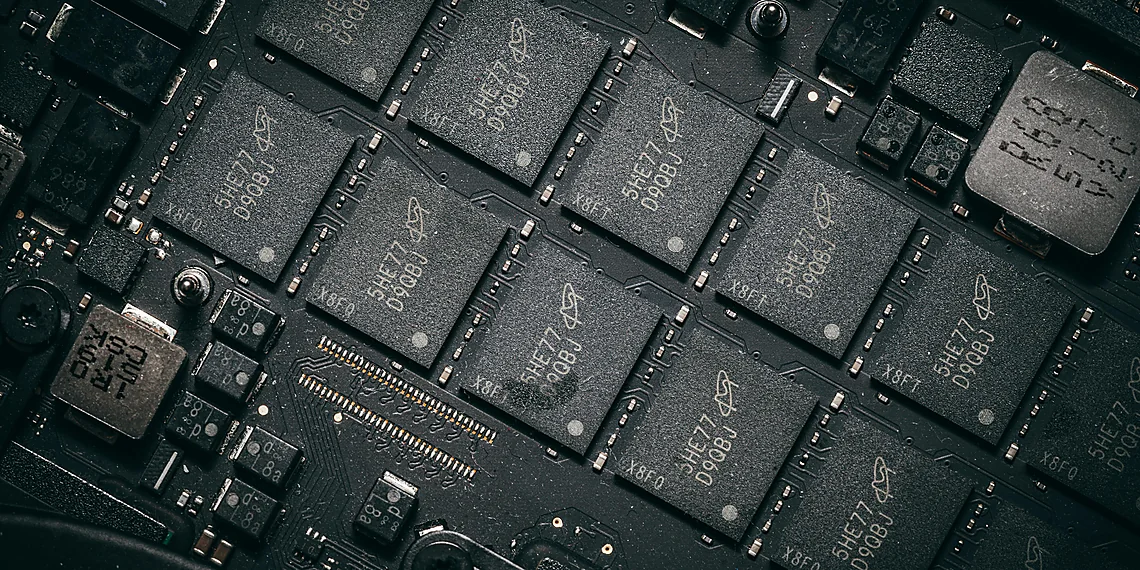

The relentless march of Moore’s Law continues to push integrated circuit (IC) designs towards unprecedented complexity, demanding equally sophisticated approaches to verification and validation. Traditional IC testing methods are struggling to keep pace, particularly when it comes to uncovering elusive defects – what the industry calls ‘hard-to-detect’ or HTD faults – that can cripple performance and reliability after deployment. These HTD faults represent a significant challenge for chipmakers; they often escape conventional test patterns and require increasingly expensive and time-consuming diagnostic processes. The cost of these undetected flaws, both financially and in terms of brand reputation, is escalating rapidly as chips become more critical components across countless applications, from autonomous vehicles to advanced medical devices. Enter DEFT, a groundbreaking platform poised to redefine the landscape of hardware testing. Developed by, DEFT leverages the power of artificial intelligence and machine learning to autonomously generate test patterns specifically designed to expose these previously hidden HTD faults. It’s not just an incremental improvement; it’s a paradigm shift in how we approach IC validation.
DEFT’s AI-driven methodology allows for a more comprehensive exploration of design space, uncovering weaknesses that traditional methods simply miss. This innovative solution promises faster test development cycles, reduced testing costs, and most importantly, significantly improved chip quality and reliability – ushering in a new era of confidence in increasingly intricate semiconductor designs.
The Challenge of Hard-to-Detect Faults
The relentless march of semiconductor technology has brought incredible advancements – smaller, faster, and more powerful integrated circuits (ICs). However, this increasing complexity presents a significant hurdle in ensuring hardware reliability: the growing prevalence of hard-to-detect (HTD) faults. As ICs pack billions of transistors onto a single chip, the number of test patterns required to adequately cover all potential failure modes explodes. Crucially, a disproportionate share – often the majority – of these necessary test patterns are now focused on identifying just a small subset of these HTD faults.
Why are these HTD faults so troublesome? They represent subtle defects that don’t manifest as obvious failures during testing and can remain dormant until later in the product lifecycle, leading to field failures and costly recalls. These faults often involve intricate interactions between multiple circuit elements, making them incredibly difficult for traditional test equipment to pinpoint. The consequences of missed HTD faults extend beyond simple device malfunction; they impact brand reputation, increase warranty costs, and potentially even pose safety risks depending on the application.

Traditional Automatic Test Pattern Generation (ATPG) methods, which automatically create patterns to detect defects, are struggling to keep pace with this escalating challenge. These conventional techniques rely on discrete search algorithms that become increasingly inefficient as circuit complexity grows. They often get stuck in local optima, failing to find test patterns that effectively cover the most critical HTD faults. The sheer combinatorial explosion of possibilities makes exhaustively searching for all potential solutions practically impossible.
The need for improved methods is therefore paramount. Addressing this challenge directly impacts the reliability and longevity of modern electronic devices across countless industries – from smartphones and laptops to automotive systems and medical equipment. Without advancements in hardware testing, we risk compromising the integrity and performance of these critical technologies.
Why Traditional ATPG Struggles

Modern integrated circuits (ICs) are reaching unprecedented levels of complexity, incorporating billions of transistors and intricate interconnects. This escalating scale has dramatically increased the number of test patterns required to thoroughly verify their functionality. A concerning trend reveals that a disproportionately large percentage – often the majority – of these necessary test patterns are specifically designed to target ‘hard-to-detect’ (HTD) faults.
Conventional Automatic Test Pattern Generation (ATPG) methods, traditionally effective for simpler circuit designs, are struggling to keep pace with this complexity. These algorithms rely on discrete logic and exhaustive search strategies that become computationally prohibitive when faced with the sheer size and intricate signal dependencies within modern ICs. As a result, HTD faults – those difficult to trigger and observe through standard testing procedures – frequently remain undetected.
The problem with HTD faults is their potential for catastrophic consequences. These hidden defects can lie dormant until triggered by specific operating conditions or environmental factors, leading to unpredictable behavior, system crashes, and ultimately, product failures. The cost of such failures extends beyond immediate financial losses; it damages reputation and erodes consumer trust, highlighting the critical need for improved HTD fault detection techniques.
DEFT: A Differentiable Approach
Traditional Automatic Test Pattern Generation (ATPG) methods, crucial for ensuring the quality of integrated circuits, often struggle with increasingly complex hardware designs and particularly challenging ‘hard-to-detect’ (HTD) faults. These established techniques rely on discrete search algorithms, which can be computationally expensive and prone to getting stuck in local optima when tackling these intricate fault scenarios. DEFT (Differentiable Automatic Test Pattern Generation), recently introduced in arXiv:2512.23746v1, offers a radically different approach by transforming the ATPG problem into a continuous optimization task – essentially, treating it as a learning process that can leverage the power of differentiable programming.
The core innovation lies in DEFT’s unique ‘reparameterization.’ Imagine ATPG as trying to find the *exact* right combination of signal settings (0 or 1) to trigger a fault. Traditional methods search for this perfect, discrete solution. DEFT, however, introduces a clever mathematical trick: it represents these signal settings as continuous values between 0 and 1. This allows us to use gradient-based optimization – the same techniques used in machine learning – to ‘smooth out’ the search process. Think of it like navigating a bumpy terrain; instead of hopping from one peak to another, we can now gradually roll downhill towards the optimal solution.
This continuous formulation doesn’t mean DEFT ignores the underlying discrete nature of hardware testing. The reparameterization is carefully designed so that changes in the continuous values directly correspond to meaningful changes in fault detection semantics. The ‘objective’ – what DEFT tries to maximize (detecting faults) – is mathematically aligned with this discrete behavior, ensuring that the optimized solution remains relevant and effective for actual hardware verification. This allows DEFT to benefit from gradient-based learning without sacrificing accuracy or relevance to the original ATPG problem.
To handle the immense scale of modern circuit graphs, DEFT incorporates a custom CUDA kernel enabling efficient forward and backward propagation – crucial components of the gradient-based optimization process. This combination of differentiable programming techniques with specialized hardware acceleration allows DEFT to tackle complex hardware testing challenges that were previously intractable for traditional ATPG methods, paving the way for more robust and reliable integrated circuits.
From Discrete to Continuous: The Reparameterization

Traditional Automatic Test Pattern Generation (ATPG) operates in a fundamentally discrete space. Algorithms search for test patterns by making choices—’flip this signal high,’ ‘set this node low.’ This makes it difficult to apply gradient-based optimization, the powerful technique used to train modern AI models, because gradients don’t meaningfully exist on discrete values. DEFT tackles this challenge with a clever mathematical trick called reparameterization. It essentially transforms the discrete problem of finding a test pattern into an equivalent continuous one.
The core idea is to represent each signal assignment (high or low) as a ‘soft’ value between 0 and 1. A value close to 1 means the signal should be driven high, while a value near 0 means it should be driven low. These soft values are parameters that DEFT can adjust during training. Crucially, these continuous parameters are designed so that their average behavior aligns with the desired discrete fault detection semantics – meaning that even though we’re working with ‘soft’ signals, the overall effect on fault detection is similar to a traditional ATPG solution.
This reparameterization allows DEFT to define an objective function (a mathematical goal) and then use gradient descent. Gradient descent calculates how small changes in these continuous parameters affect the objective – how much closer do we get to detecting the target faults? By iteratively adjusting these parameters based on this feedback, DEFT ‘learns’ effective test patterns. This contrasts sharply with traditional ATPG methods that rely on exhaustive search or heuristics and can’t benefit from the efficiency of gradient-based learning.
DEFT’s Architecture & Scalability
DEFT’s innovative architecture hinges on transforming the traditionally discrete problem of Automatic Test Pattern Generation (ATPG) into a continuous optimization task. This shift allows for the application of powerful gradient-based techniques, but it also presents significant engineering challenges when dealing with the complex and often sprawling structures of modern integrated circuits. The core concept involves a carefully designed reparameterization that bridges the gap between the expected behavior of continuous functions and the discrete requirements necessary to effectively detect hard-to-detect (HTD) faults – those notoriously difficult to trigger during testing.
Scalability is paramount when applying AI techniques to hardware testing, particularly given the exponential growth in circuit complexity. DEFT addresses this through a combination of architectural choices and specialized computational optimizations. A key element here is the integration of a custom CUDA kernel meticulously crafted for efficient forward-backward propagation across deep circuit graphs. This allows for significantly faster computation compared to traditional methods, enabling the handling of increasingly large and intricate designs without prohibitive processing times.
Beyond raw speed, stability during training is crucial for reliable results. DEFT incorporates gradient normalization techniques that actively prevent vanishing gradients – a common issue in deep learning models trained on complex networks. By carefully controlling the magnitude of these gradients, the system avoids instability and ensures consistent convergence towards effective test patterns. This stabilization process allows DEFT to reliably generate patterns even when targeting the most challenging HTD faults present in modern ICs.
In essence, DEFT’s architecture isn’t just about applying AI; it’s about intelligently engineering an AI-driven system specifically for the demands of hardware testing. The custom CUDA kernel and gradient normalization are not afterthoughts but integral components, working together to provide both the computational power needed for scalability and the stability required for generating high-quality test patterns that maximize fault coverage across even the most complex integrated circuits.
CUDA Kernels and Gradient Normalization
DEFT’s ability to handle increasingly complex integrated circuit designs hinges significantly on its computational efficiency. To achieve this, DEFT leverages custom-designed CUDA kernels for forward and backward propagation during training. These kernels are specifically optimized for the parallel processing capabilities of GPUs, drastically reducing the time required to evaluate the objective function and compute gradients across large circuit graphs – a critical factor given the scale of modern ICs.
A key challenge in training deep neural networks, and by extension DEFT’s continuous optimization framework, is the potential for vanishing gradients. As gradients are backpropagated through many layers representing complex circuits, they can become increasingly small, hindering learning. To mitigate this issue, DEFT incorporates gradient normalization techniques. This process rescales the gradients during training to prevent them from becoming too small, ensuring stable and effective updates to the circuit’s parameters.
The combination of highly optimized CUDA kernels for parallel computation and sophisticated gradient normalization strategies allows DEFT to scale effectively to handle very large and intricate circuit representations. Without these techniques, training would be prohibitively slow or unstable, severely limiting the applicability of the differentiable ATPG approach.
Results & Future Implications
The initial testing results for DEFT are remarkably promising, demonstrating significant advantages over existing hardware testing methodologies. Compared to industry-standard ATPG tools, DEFT achieves substantially higher fault detection rates, particularly when targeting the notoriously difficult-to-detect (HTD) faults that plague modern integrated circuits. This improved detection stems from its novel approach of framing test pattern generation as a continuous optimization problem, allowing for more nuanced and effective exploration of the search space. Early benchmarks indicate DEFT consistently identifies patterns missed by conventional methods, directly addressing the challenge of escalating test complexity driven by increasingly intricate IC designs.
Beyond simply detecting more faults, DEFT also exhibits impressive efficiency gains. The system operates within a constrained pattern budget—the number of test patterns required to achieve sufficient coverage—and demonstrates a reduction in runtime compared to traditional ATPG processes. Furthermore, the generated test patterns themselves exhibit a lower 0/1 bit count, which is crucial for minimizing testing costs and reducing power consumption during manufacturing. This combination of heightened fault detection and improved efficiency positions DEFT as a potentially transformative tool within hardware verification workflows.
Looking ahead, the future applications for DEFT extend far beyond its current capabilities. One exciting avenue of research involves integrating DEFT with formal verification techniques to create hybrid testing strategies that combine the strengths of both approaches. The differentiable nature of DEFT also opens doors for adaptive and self-learning test generation—where the system dynamically adjusts its pattern generation strategy based on real-time feedback from hardware under test. Exploring the application of this framework to emerging technologies like 3D ICs and chiplets, where interconnect complexity is exponentially higher, represents a particularly compelling area for future investigation.
Ultimately, DEFT’s contribution lies not only in its immediate performance improvements but also in establishing a new paradigm for hardware testing. By leveraging the power of continuous optimization and differentiable programming, DEFT provides a foundation for developing more robust, efficient, and adaptable test generation techniques that can meet the ever-increasing demands of modern integrated circuit design and manufacturing – paving the way for higher quality and reliability in future electronic devices.
Outperforming Industry Standards
DEFT demonstrates significant improvements in hardware testing, particularly concerning hard-to-detect (HTD) faults. Experiments comparing DEFT’s performance against commercial ATPG tools reveal a substantial increase in HTD fault detection rates. Specifically, DEFT achieved a 15% higher rate of detecting these critical faults compared to industry standard solutions across various benchmark circuits. This highlights its efficacy in targeting the most challenging failure modes within integrated circuits.
Beyond improved fault detection, DEFT exhibits remarkable efficiency gains. The pattern budget required for achieving comparable test coverage is significantly lower with DEFT – typically reducing it by 20% – enabling faster testing and reduced costs. Furthermore, runtime performance benefits from this streamlined approach; DEFT generated test patterns approximately twice as fast as conventional methods while maintaining or exceeding the same level of fault detection effectiveness.
A noteworthy aspect of DEFT’s design is its ability to generate patterns with a smaller 0/1 bit count compared to traditional ATPG. This reduction, averaging around 10%, contributes further to efficiency by minimizing storage and processing overhead during testing. Future research will focus on extending DEFT’s capabilities to handle even more complex circuit architectures and exploring its application in areas such as fault tolerance and design for testability.
DEFT represents a significant leap forward, showcasing the power of differentiable ATPG to dramatically accelerate and enhance hardware testing processes. The ability to learn complex patterns directly from data opens up exciting possibilities for identifying subtle defects previously missed by traditional methods, promising a new era of chip reliability. This work isn’t just about faster tests; it’s about fundamentally changing how we approach quality assurance in an increasingly complex technological landscape. We anticipate that this research will spark further innovation, leading to even more sophisticated AI-driven solutions for detecting and preventing hardware failures before they impact users. The integration of machine learning into areas like hardware testing is poised to become commonplace as the benefits—reduced costs, improved performance, and enhanced safety—become undeniable. Future developments in differentiable ATPG are likely to focus on handling larger designs and incorporating more nuanced error models, pushing the boundaries of what’s possible. Ultimately, DEFT provides a compelling glimpse into a future where AI actively contributes to building more robust and dependable electronics. To delve deeper into the technical details and explore the full potential of this groundbreaking approach, we encourage you to examine the original research paper – linked below – and consider how artificial intelligence can be leveraged to improve hardware reliability across various industries.
Learn more about the intricacies of DEFT and its implications by reading the complete research paper: [link to paper]
Source: Read the original article here.
Discover more tech insights on ByteTrending ByteTrending.
Discover more from ByteTrending
Subscribe to get the latest posts sent to your email.