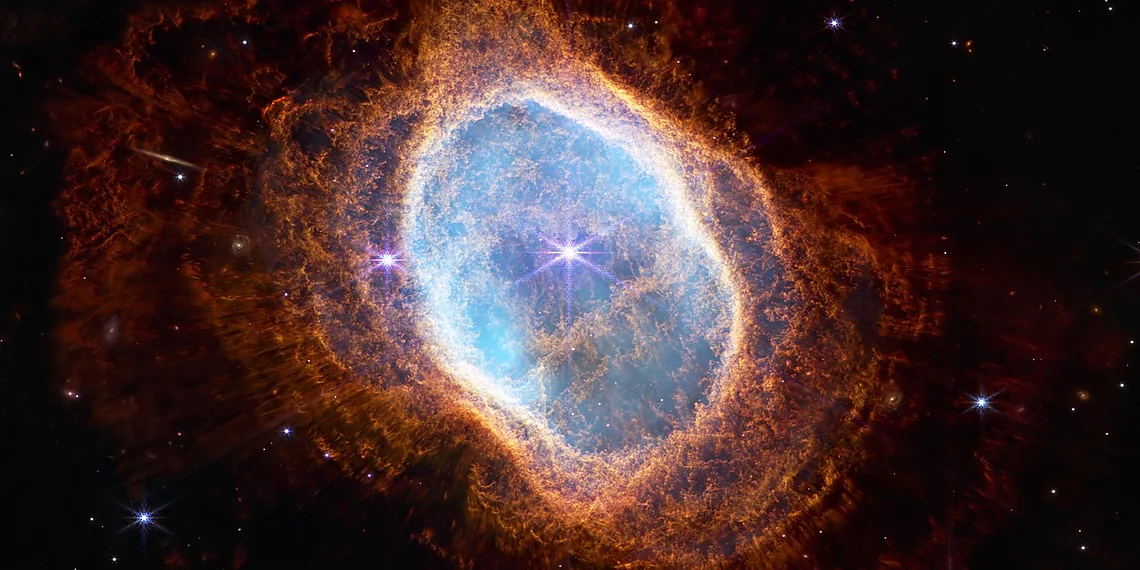

Imagine peering across billions of years, witnessing galaxies swirling into existence, and marveling at nebulae painted with colors unseen by human eyes – that’s the breathtaking reality now accessible thanks to recent imagery released in celebration of a momentous anniversary. The universe has always held secrets, but until recently, accessing them felt like an impossible dream. Now, stunning new video footage offers an unprecedented glimpse into cosmic wonders, captured and meticulously compiled to showcase the sheer power and artistry of modern astronomy. This isn’t just pretty pictures; it’s data revealing the building blocks of our universe, providing invaluable insights for scientists and inspiring awe in anyone who gazes upon its beauty. The incredible detail we see is thanks to the revolutionary capabilities of the Webb Space Telescope, an engineering marvel designed to peer through cosmic dust and observe infrared light – a spectrum invisible to traditional telescopes. This anniversary release provides a perfect opportunity to appreciate not only the stunning visuals but also the profound scientific impact this telescope continues to deliver, pushing the boundaries of our understanding further than ever before.
The newly released video is more than just an aesthetic treat; it’s a testament to years of dedication and international collaboration. The Webb Space Telescope represents humanity’s collective ambition to unravel the mysteries surrounding us, from the earliest stars to the potential for life beyond Earth. These visuals allow us to witness processes occurring far beyond our solar system, offering clues about how galaxies form and evolve over vast timescales. Prepare to be transported on a cosmic journey as we explore some of the most remarkable images and videos recently unveiled, highlighting the ongoing discoveries made possible by this groundbreaking instrument.
Reliving Webb’s Launch & Early Successes
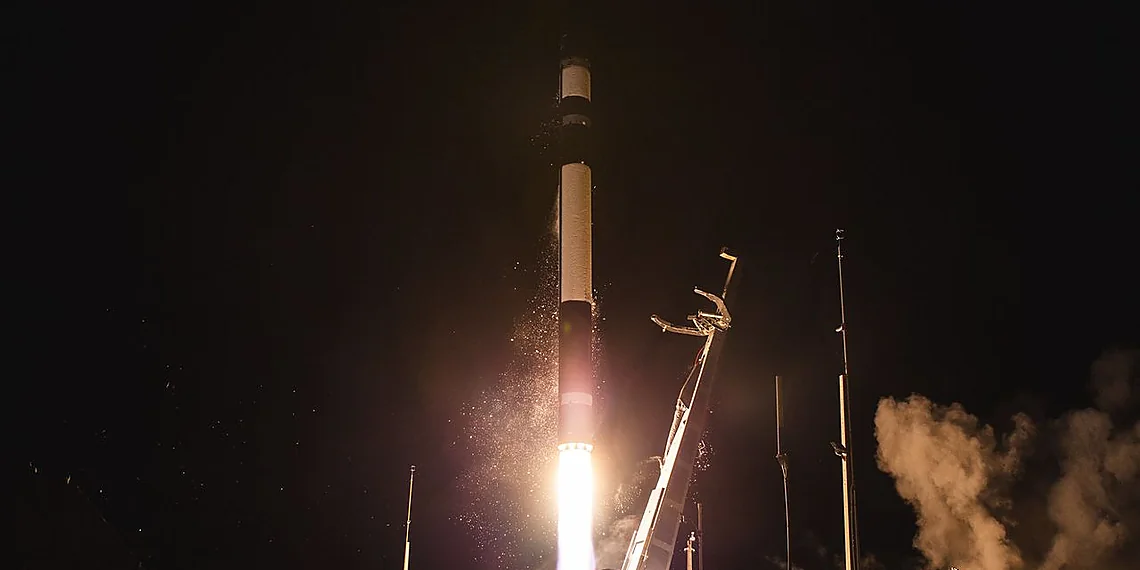
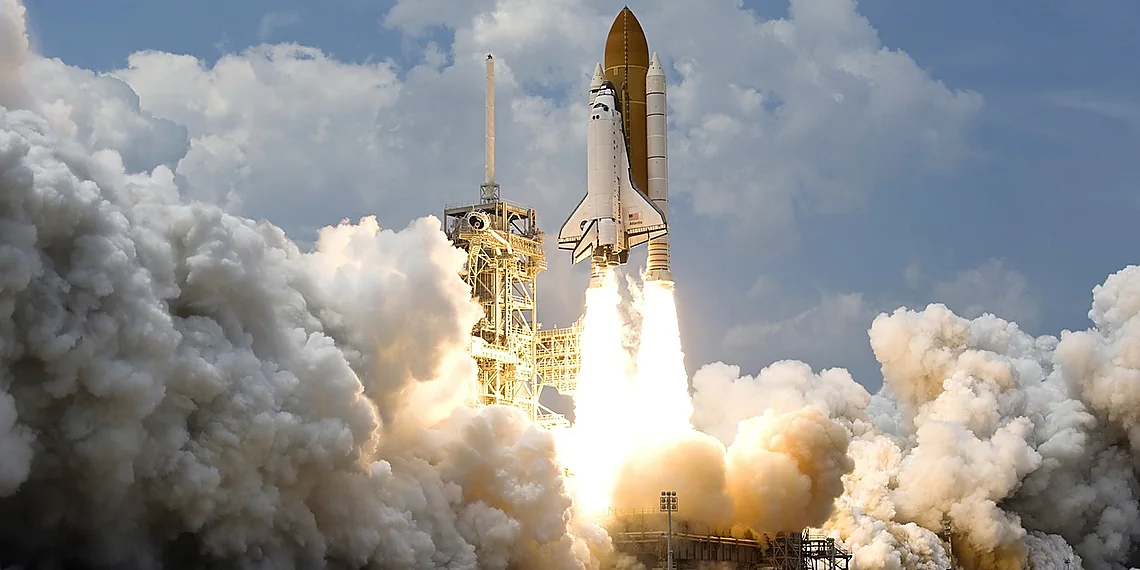
It’s hard to believe, but it’s been over three years since the James Webb Space Telescope (Webb Space Telescope) embarked on its incredible cosmic journey! To celebrate this significant anniversary, let’s rewind and relive the momentous launch of December 25, 2021. The anticipation was palpable as this engineering marvel – decades in the making and representing an unprecedented collaboration between NASA, ESA, and CSA – finally left Earth’s atmosphere. More than just a launch, it was the culmination of tireless work by thousands of scientists, engineers, and technicians who overcame countless technical hurdles to bring Webb’s ambitious vision to life.
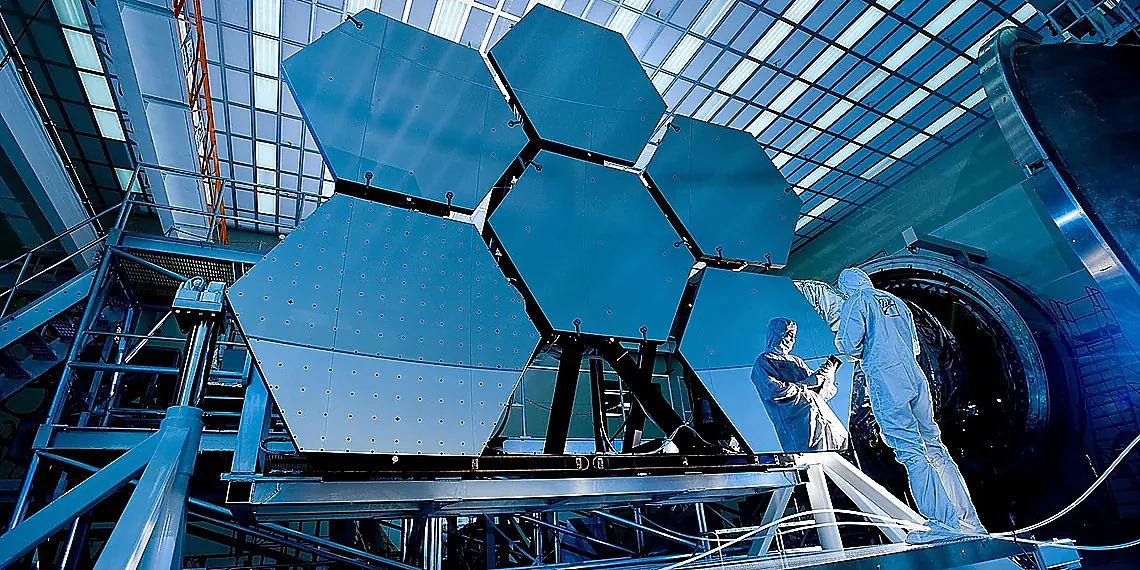
The deployment sequence itself was a breathtaking feat of precision engineering. Unfolding its massive gold-plated mirror and complex sunshield – all while millions of miles from Earth – was an incredibly delicate process that could have gone wrong at any stage. The success of each step, from the solar array deployments to the meticulous alignment of the 18 hexagonal mirror segments, exceeded expectations and signaled a new era in astronomical observation. This wasn’t merely about getting Webb into space; it was about ensuring its functionality as the most powerful telescope ever built.
The early data released by the Webb Space Telescope quickly confirmed its revolutionary capabilities. Images revealed previously unseen details of distant galaxies, stellar nurseries teeming with newborn stars, and even provided unprecedented insights into exoplanet atmospheres. These initial discoveries weren’t just beautiful; they were fundamentally reshaping our understanding of the universe’s origins and evolution. The clarity and depth of Webb’s observations consistently surpassed pre-launch projections, solidifying its position as a transformative tool for astronomers worldwide.
From conception to orbit, the story of the James Webb Space Telescope is one of extraordinary ambition, relentless innovation, and ultimately, resounding success. Its anniversary provides an opportunity not only to appreciate the stunning visuals it continues to deliver but also to reflect on the human ingenuity that made this cosmic journey possible – a journey that promises to reveal even more wonders about our universe in the years to come.
From Conception to Orbit: A Timeline

The concept for what would become the James Webb Space Telescope (Webb) emerged in the 1990s as a successor to the Hubble Space Telescope. Scientists recognized the need for an infrared-optimized telescope, capable of peering through cosmic dust and observing the earliest galaxies formed after the Big Bang – something Hubble couldn’t do effectively. Initial design studies began in earnest in 1996, envisioning a large aperture mirror and complex sunshield to block out heat and allow for sensitive infrared observations; however, technological hurdles and budget constraints repeatedly delayed progress.
Following decades of development, including significant redesigns and cost overruns, the Webb Space Telescope finally launched on December 25, 2021, aboard an Ariane 5 rocket from French Guiana. The subsequent deployment sequence was incredibly complex, involving unfolding a tennis-court sized sunshield and precisely aligning the telescope’s primary mirror – comprised of 18 gold-plated hexagonal segments. Any one of these steps could have resulted in mission failure, highlighting the immense engineering challenges overcome by international teams.
After launch, Webb underwent a six-month period of meticulous calibration and alignment. The first images released in July 2022 exceeded all expectations, showcasing unprecedented detail of distant galaxies, nebulae, and star clusters. These early successes confirmed that Webb was performing beyond initial projections, promising transformative discoveries about the universe’s origins and evolution.
The Art of Cosmic Zoom
The mesmerizing ‘fly-through’ videos showcasing the James Webb Space Telescope’s observations aren’t simply recordings of what the telescope ‘sees.’ They are meticulously crafted works of art, built from raw scientific data and a complex series of transformations. To understand their beauty is to appreciate the ingenuity behind them – a process that bridges the gap between infrared light invisible to our eyes and the breathtaking visuals we’ve come to associate with Webb.
The journey begins with the telescope’s instruments, which capture infrared light—a form of electromagnetic radiation longer in wavelength than visible light. This data arrives as grayscale images representing varying intensities of infrared emissions. These aren’t inherently colorful; Webb doesn’t ‘see’ colors like we do. Scientists then employ a technique called color mapping to assign different colors to various wavelengths of infrared light, effectively translating the invisible into something our eyes can interpret. Different elements in space – gas clouds, dust, stars – emit at different infrared wavelengths, so each gets assigned a hue.
The creation of these ‘fly-throughs’ involves more than just colorization. Sophisticated software and algorithms are used to stack multiple images taken at different angles and depths, creating a three-dimensional representation of the observed object. Think of it like building a 3D model from many flat slices. Algorithms identify features within each image and then precisely align them to construct a cohesive structure. This process also involves correcting for distortions caused by the telescope’s optics and the movement of space itself. The resulting data is then rendered, often using software capable of handling extremely large datasets and complex visualizations.
Finally, animators use these processed 3D models to create the ‘fly-through’ effect – simulating a camera moving through space. This isn’t a literal journey; it’s a carefully choreographed visual representation designed to highlight specific features and provide a sense of scale and depth. The entire process is a collaborative effort between scientists, data processors, and visualization specialists working together to unveil the universe in a way that inspires wonder and understanding.
Data Processing & Visualization Techniques
The breathtaking ‘fly-through’ videos we see from the James Webb Space Telescope (Webb) aren’t simply recordings of what the telescope ‘sees.’ They are carefully constructed representations built from raw infrared data. Because Webb observes primarily in infrared light – which is invisible to human eyes – scientists must process and colorize this data to create images that we can understand and appreciate. Think of it like translating a foreign language; the infrared signals need to be interpreted and presented in a familiar format.
The initial processing involves calibrating the raw data, removing noise, and aligning multiple exposures taken over time. This creates a foundational ‘grayscale’ image representing varying intensities of infrared light. Color is then assigned to different wavelengths of this infrared light – often arbitrarily chosen by scientists to highlight specific features or elements within the scene. For instance, red might represent longer wavelengths (cooler objects), while blue represents shorter wavelengths (hotter objects). Software like NASA’s Mikado and other custom pipelines are frequently used for these initial steps.
Finally, creating the ‘fly-through’ effect involves digitally stitching together multiple processed images and animating them to simulate movement. This isn’t a literal reconstruction of space; it’s an artistic interpretation designed to showcase depth and detail. Sophisticated rendering techniques are employed to create a sense of perspective and realism, further enhancing the visual impact. While specific animation software varies between teams, the goal is always to present Webb’s groundbreaking data in an accessible and engaging way.
Unveiling the Universe’s Hidden Beauty
The James Webb Space Telescope continues to redefine our understanding of the cosmos, and on its launch anniversary, ESA has gifted us with a breathtaking compilation showcasing some of its most stunning visuals. This isn’t just pretty pictures; each image represents years of planning, complex engineering, and groundbreaking scientific discovery. The video offers incredible zooms into distant nebulae, galaxies, and other celestial wonders, revealing details previously obscured by dust and distance – details that are reshaping our models of star formation, galaxy evolution, and even the potential for life beyond Earth.
One particularly mesmerizing vista featured is the Pillars of Creation in the Eagle Nebula. These towering columns of interstellar gas and dust are stellar nurseries where new stars are born. Webb’s infrared vision pierces through the obscuring material, revealing previously unseen details within the pillars – a vibrant tapestry of star birth happening right before our eyes. The telescope’s observations have allowed scientists to more accurately determine the mass of these pillars and understand how they interact with surrounding radiation, refining our understanding of the processes that lead to new stars.
Beyond individual nebulae, Webb’s capabilities truly shine when observing distant galaxy clusters. The video highlights one such cluster, appearing as a collection of swirling light years away. These massive structures are not just beautiful; they act as gravitational lenses, warping and magnifying the light from even more distant objects behind them. Webb’s ability to detect this magnified light allows astronomers to peer further back in time – essentially looking at galaxies as they were billions of years ago, providing invaluable insight into the early universe’s formation and evolution.
Ultimately, the visuals presented by ESA are more than just aesthetic marvels; they are tangible evidence of Webb’s transformative power. Each zoom reveals a deeper layer of understanding about the universe we inhabit, pushing the boundaries of our knowledge and inspiring future generations of scientists and explorers. The telescope’s ongoing observations promise even more revelations to come, constantly reminding us that there is still so much left to discover in the vast expanse beyond our planet.
Nebulae, Galaxies, and Beyond: A Visual Tour
One of the most iconic images captured by the Webb Space Telescope is the Pillars of Creation, located within the Eagle Nebula. These towering structures are immense columns of interstellar gas and dust, primarily hydrogen and helium, where new stars are actively forming. Over millions of years, intense ultraviolet radiation from nearby massive stars has eroded these pillars, sculpting them into their distinctive shapes. Webb’s infrared observations pierce through the obscuring dust clouds to reveal previously unseen details within the pillars – newborn stars still embedded in their stellar nurseries and a surprising number of young star clusters that were hidden from earlier telescopes like Hubble.
The telescope also provided an unprecedented view of MACS0647-JD, one of the most distant galaxies ever observed. Located over 13 billion light-years away, its light has been stretched by the expansion of the universe – a phenomenon known as redshift. Webb’s Near Infrared Camera (NIRCam) allowed astronomers to see this galaxy in greater detail than ever before, revealing faint, tiny structures within it that hint at early stages of galactic evolution. This observation helps scientists understand how galaxies formed and grew in the very early universe, shortly after the Big Bang.
Another remarkable target is Stephan’s Quintet, a visual grouping of five galaxies – four of which are physically interacting with each other. This system provides a unique laboratory for studying galactic mergers and the effects they have on star formation and supermassive black hole activity. Webb’s observations revealed intricate details within these merging galaxies, including tidal tails—streams of stars and gas pulled out by gravitational forces—and evidence of powerful outflows driven by intense starbirth and active galactic nuclei. These features provide valuable insights into how galaxies evolve through collisions and interactions over cosmic time.
What’s Next for Webb?
Now that the James Webb Space Telescope has thoroughly wowed us with its breathtaking images and groundbreaking data, a crucial question arises: what’s next? The telescope’s mission isn’t just about looking back; it’s about pushing the boundaries of our understanding of the universe. A packed observing schedule lies ahead, filled with ambitious projects designed to tackle some of astronomy’s biggest mysteries – from characterizing the atmospheres of distant exoplanets to peering deeper into the early epochs of galaxy formation.
One particularly exciting area focuses on exoplanet research. Webb will continue its work analyzing the composition of exoplanet atmospheres, searching for biosignatures – potential indicators of life beyond Earth. This involves observing how starlight filters through these atmospheres and identifying specific molecules that could suggest biological activity. Beyond individual planets, future observations aim to study entire planetary systems, providing a more comprehensive picture of where and how planets form.
Looking further back in time, Webb is primed to investigate the universe’s infancy. Upcoming programs will target extremely distant galaxies whose light has been stretched by the expansion of the universe – a phenomenon known as redshift. By analyzing these ancient galaxies, scientists hope to piece together a more complete timeline of how galaxies evolved from their initial formation to the complex structures we observe today. This includes understanding the role of supermassive black holes in early galaxy development.
While Webb’s primary mission is already exceeding expectations, ongoing refinements and innovative observation techniques promise even more remarkable discoveries down the line. The telescope’s longevity and potential for unexpected breakthroughs are truly astounding, ensuring that our cosmic journey with the Webb Space Telescope will continue to reshape our perspective on the universe for years to come.
Future Missions & Scientific Goals
Following a remarkably successful first year, the James Webb Space Telescope (Webb) has secured observing time for its second cycle, promising even more groundbreaking scientific investigations. These upcoming programs build on initial discoveries and will focus intensely on characterizing exoplanet atmospheres – analyzing starlight filtered through planetary atmospheres to identify potential biosignatures and understand their composition. Multiple proposals are dedicated to searching for evidence of water vapor, methane, and other molecules that could indicate habitability or even life beyond Earth.
A significant portion of Webb’s future observing time will be devoted to unraveling the mysteries surrounding early galaxy formation. Scientists aim to observe galaxies at redshifts significantly higher than previously possible, allowing them to peer back closer to the Big Bang and witness the processes by which the first stars and galaxies emerged from the cosmic dark ages. These observations will test current cosmological models and refine our understanding of how structures in the universe evolved.
Beyond exoplanets and early galaxies, Webb’s flexible observing capabilities allow for a wide range of investigations. Future programs include detailed studies of star formation within our own Milky Way galaxy, probing the environments where new stars are born, as well as characterizing comets and other objects in our solar system. The telescope’s longevity – estimated to be significantly longer than initially planned due to fuel efficiency – ensures that these ambitious scientific goals can continue to be pursued for years to come.
The journey we’ve taken, exploring the universe through the eyes of the James Webb Space Telescope, has fundamentally reshaped our understanding of cosmic origins and evolution.
From peering into the atmospheres of distant exoplanets to revealing stunning details within nebulae, Webb’s observations are rewriting textbooks and inspiring a new generation of scientists and stargazers alike.
The sheer depth and clarity of its images – capturing light from galaxies born billions of years ago – truly underscore the power of human ingenuity and our relentless pursuit of knowledge.
The Webb Space Telescope isn’t just providing data; it’s delivering breathtaking artistry, transforming complex scientific findings into visually stunning experiences accessible to everyone. We are only at the beginning of what this incredible instrument can reveal about our place in the vast cosmos, and the possibilities for future discoveries feel limitless now more than ever before..”,
Continue reading on ByteTrending:
Discover more tech insights on ByteTrending ByteTrending.
Discover more from ByteTrending
Subscribe to get the latest posts sent to your email.