

The Mission: Open Cosmos’ Growing Footprint
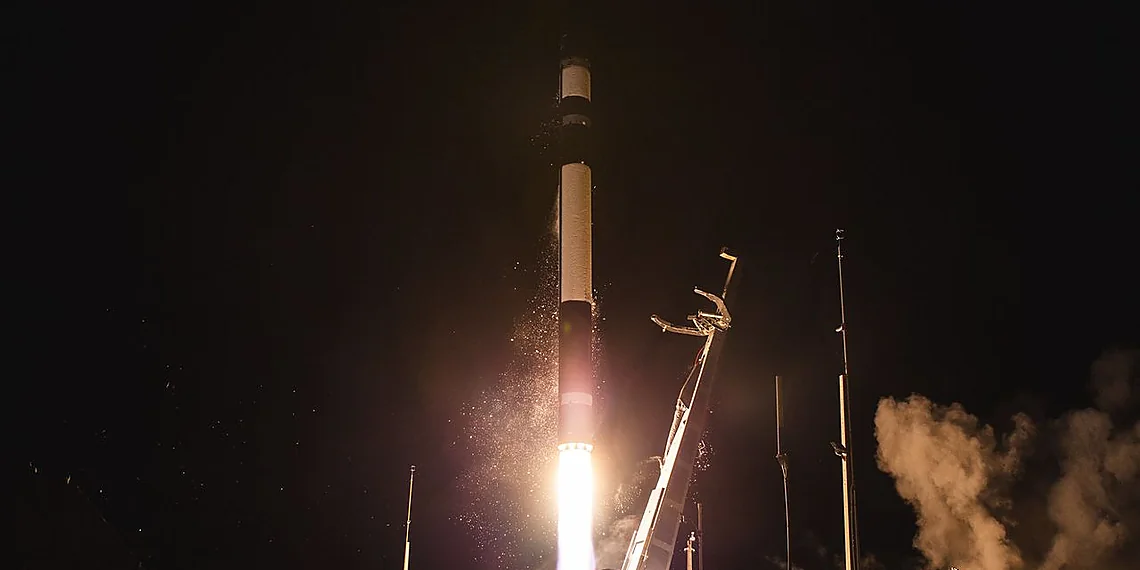
Rocket Lab’s initial mission of 2026, successfully launched earlier today (Jan. 22), marks a significant milestone for European geospatial data provider Open Cosmos. The launch carried two satellites into low Earth orbit, furthering Open Cosmos’ ambition to democratize access to satellite imagery and data analytics. Unlike traditional models that often involve lengthy procurement processes and complex contracts, Open Cosmos provides a platform enabling users – from researchers to businesses – to readily access satellite data through APIs and user-friendly interfaces, essentially treating satellite access like a utility.
Open Cosmos specializes in Earth observation, offering a wide range of imagery products derived from various satellites. They aggregate data from multiple sources, including their own constellation being built, and process it into actionable insights for diverse applications such as precision agriculture, disaster response, infrastructure monitoring, and environmental analysis. The company’s business model revolves around making this powerful geospatial intelligence accessible to a broader audience, removing traditional barriers to entry in the satellite imagery market.
The deployment of these two new satellites isn’t simply about adding more assets to orbit; it’s a strategic move driven by the increasing demand for high-quality geospatial data. More satellites translate directly into increased coverage – allowing Open Cosmos to monitor larger areas and provide more frequent updates on changing conditions. Higher resolution imagery enables finer detail, crucial for applications like urban planning or tracking deforestation. Furthermore, a denser constellation facilitates faster refresh rates, meaning users can access near real-time data critical during rapidly evolving events.
This Rocket Lab launch is just one step in Open Cosmos’ ongoing expansion plans. They are actively building out their own satellite constellation and partnering with other providers to ensure a robust and versatile geospatial data offering. The continued reliance on companies like Rocket Lab for launch services underscores the vital role of commercial spaceflight in enabling this growth, and highlights the increasing accessibility of space-based resources for businesses and researchers alike.
Open Cosmos: Earth Observation Specialists

Open Cosmos is a European company rapidly establishing itself as a key player in the Earth observation market. They specialize in providing satellite imagery and data analytics services to organizations across various sectors including defense, agriculture, climate monitoring, and infrastructure management. Unlike traditional satellite imagery providers who often require lengthy contracts and complex processes, Open Cosmos offers access to satellite data through a subscription model, making it significantly more accessible and flexible for users.
A core differentiator for Open Cosmos is their unique approach to satellite deployment and operation. They don’t necessarily own all the satellites they utilize; instead, they leverage existing constellations from multiple providers, including Rocket Lab. This allows them to offer a broader range of imagery options – different resolutions, spectral bands, and revisit times – tailored to specific client needs without the massive capital investment typically associated with owning and operating an entire satellite fleet.
The two satellites launched by Rocket Lab this morning represent a significant expansion of Open Cosmos’s capabilities. These additional assets will enhance their ability to deliver timely and high-quality imagery, further supporting their mission of democratizing access to Earth observation data.
Why More Satellites?

Open Cosmos is rapidly expanding its satellite constellation to provide a unique Earth observation service – offering dedicated, custom-built satellites accessible through a software platform. Unlike traditional commercial imagery providers, Open Cosmos designs and operates its own satellites, enabling them to tailor capabilities precisely to customer needs. This launch marks a significant step in their ambition to build a fleet of over 100 satellites.
The need for multiple satellites stems from several key benefits that increased coverage and capacity provide. More satellites directly translate into more frequent revisits to specific locations on Earth, allowing for higher refresh rates – crucial for applications like disaster response and environmental monitoring. Furthermore, expanding the constellation allows Open Cosmos to achieve greater global coverage, enabling them to capture data from a wider range of regions.
With each new satellite deployment, Open Cosmos is able to offer improved resolution imagery and more detailed insights. This enhanced capability empowers clients across various sectors – including agriculture, defense, and infrastructure management – with the information they need for informed decision-making. The Rocket Lab launch represents an important milestone in realizing this vision of readily available, high-quality Earth observation data.
Rocket Lab’s Electron: A Reliable Workhorse
Rocket Lab’s Electron rocket has quickly established itself as a key player in the burgeoning small satellite launch market, and today’s mission for Open Cosmos serves as another testament to its reliability. The Electron is specifically designed to cater to the increasing demand for dedicated launches – something traditional, larger rockets often can’t efficiently accommodate. Unlike behemoths built for massive payloads, the Electron’s streamlined design allows it to precisely target smaller satellites, offering a cost-effective and flexible solution for companies needing to get their technology into orbit.
The rocket’s design philosophy centers around simplicity and reusability. Built primarily from carbon composite materials, the Electron boasts high performance while minimizing weight – crucial for maximizing payload capacity. While fully reusable operation is still an ongoing effort with Rocket Lab’s Neutron vehicle slated to take on that challenge, the company has been actively developing technologies like reaction control systems (RCS) and advanced recovery techniques aimed at partially reusing components of the Electron in future missions. This focus on iterative improvements ensures continued efficiency and cost reductions for customers.
The growth in demand for small satellite launch services is fueled by a variety of factors, including the proliferation of Earth observation companies, constellations for global internet access (like Starlink), and increasingly sophisticated scientific research missions. Rocket Lab’s Electron stands out due to its dedicated launch capabilities – meaning satellites aren’t competing with other payloads for space – alongside their rapid launch cadence. This allows Open Cosmos, and others like them, to deploy their satellites on a predictable timeline, accelerating their operational timelines and maximizing return on investment.
Ultimately, Rocket Lab’s Electron represents a critical evolution in space access, democratizing opportunities for smaller players in the satellite industry. The successful deployment of these Open Cosmos satellites underscores not only the rocket’s performance but also Rocket Lab’s commitment to providing reliable and accessible launch services – solidifying its position as a workhorse for the small satellite revolution.
Electron’s Strengths & Evolution
The Rocket Lab Electron is uniquely designed for the burgeoning small satellite launch market. Unlike many larger rockets that can be overly complex and costly for smaller payloads, Electron’s streamlined design focuses on efficiency and responsiveness. It utilizes a single Rutherford engine powered by LOX (liquid oxygen) and RP-1 (rocket propellant), minimizing weight and maximizing performance for these lighter satellites. The vehicle’s carbon composite construction further contributes to its lightweight profile, allowing it to deliver satellites directly into precise orbits.
A key factor in Electron’s success is Rocket Lab’s vertically integrated approach, controlling virtually every aspect of the rocket’s manufacturing process. This allows for greater quality control and faster iteration cycles, leading to continuous improvements. Recent upgrades include enhanced engine performance through nozzle extensions and improved avionics systems for increased mission flexibility. The company has also been actively pursuing reusability initiatives with its ‘Neutron’ rocket which builds upon Electron’s foundational design principles.
The launch of two Open Cosmos satellites in Rocket Lab’s first 2026 mission exemplifies the ongoing demand for dedicated small satellite launches. Electron’s ability to deliver these payloads directly into specific orbits, a capability often unavailable with rideshare missions on larger rockets, makes it an invaluable asset for companies like Open Cosmos seeking precise orbital placement and control over their satellite deployments.
The Small Satellite Launch Market
The demand for dedicated small satellite launch services has exploded in recent years, driven by a confluence of factors. These include advancements in miniaturization allowing satellites to perform increasingly complex tasks, the rise of commercial applications like Earth observation and communications, and the decreasing cost of building smaller spacecraft. Historically, small satellites were often ‘piggybacked’ onto larger launches, creating scheduling delays and limiting mission flexibility. This practice proved inefficient for companies needing precise orbital placement or unique launch windows.
Rocket Lab has emerged as a key player in this burgeoning market by focusing specifically on launching small satellites. Their Electron rocket is designed to carry payloads up to 300 kg (660 lbs) to low Earth orbit, offering a dedicated and responsive launch solution. Unlike many traditional launch providers who cater primarily to larger missions, Rocket Lab’s business model centers around providing frequent and tailored launches for smaller satellite operators.
A significant advantage of Rocket Lab’s approach is their vertically integrated infrastructure. They control the entire launch process from rocket manufacturing and launch site operations to mission control, enabling greater agility and cost-effectiveness. This allows them to offer more competitive pricing and faster turnaround times compared to companies reliant on external partners for various aspects of the launch process, further fueling the growth of the small satellite market.
Technical Highlights of the Launch
The Rocket Lab launch, kicking off 2026 with a bang, wasn’t just about getting two Open Cosmos satellites into space; it was a showcase of precision orbital mechanics and Electron rocket capabilities. The mission employed a ‘dogleg’ trajectory, meaning the Electron vehicle didn’t head straight to its target orbit. Instead, it executed a series of carefully calculated maneuvers, utilizing short bursts from its engine to adjust course. This approach allows Rocket Lab to deliver payloads to orbits that would be difficult or impossible to reach with a more direct ascent, and demonstrates a flexibility crucial for servicing the diverse needs of commercial satellite operators.
Orbit insertion itself was a particularly noteworthy aspect of this launch. The Electron’s second stage performed several burns, gradually raising the satellites’ altitude and adjusting their inclination – essentially tilting their orbital plane relative to Earth. Open Cosmos requires these satellites to operate in a specific Sun-Synchronous Orbit (SSO), which allows them to consistently pass over the same locations on Earth at the same local time each day. Achieving this precise SSO is vital for the company’s Earth observation services, ensuring consistent data collection.
A key technical consideration was minimizing propellant usage during these orbit insertion maneuvers. Rocket Lab’s flight software continuously monitored the Electron’s performance and made real-time adjustments to optimize fuel efficiency. This isn’t just about saving weight; it maximizes the amount of payload – in this case, the Open Cosmos satellites – that can be carried into space. The successful execution of these burns underscores the sophistication of Rocket Lab’s guidance, navigation, and control systems.
Beyond the immediate orbit insertion, telemetry data collected during the flight will provide valuable insights for future Electron missions. Engineers will analyze everything from engine performance to aerodynamic drag to further refine launch procedures and improve overall reliability. This iterative approach is fundamental to Rocket Lab’s ongoing commitment to advancing reusable rocket technology and expanding access to space.
Launch Trajectory & Orbit Insertion
The Rocket Lab Electron rocket followed a carefully planned trajectory during its ascent. Initially, it climbed nearly straight up for the first few minutes, gaining altitude rapidly. This vertical climb allows the rocket to pass through the densest part of Earth’s atmosphere quickly and efficiently. After reaching a certain altitude, the rocket began tilting eastward, following what’s known as an inclination trajectory. This tilt is crucial; it ensures the satellites are placed into their desired orbital plane.
Once the Electron reached its peak velocity, the second stage separated and ignited its engine to continue propelling the spacecraft towards orbit. Precise burns were executed by the second stage’s engine – short bursts of controlled thrust – to fine-tune the speed and direction. These maneuvers allowed for accurate orbit insertion, placing both Open Cosmos satellites into their designated Sun-synchronous orbits.
Sun-synchronous orbits are particularly useful for Earth observation missions like those undertaken by Open Cosmos. They maintain a consistent relationship with the sun, ensuring that the satellites pass over any given point on Earth at roughly the same local solar time each day. This consistency is vital for acquiring data under similar lighting conditions, which simplifies image processing and analysis.
Looking Ahead: Future Missions & Space Expansion
Rocket Lab’s successful mission this morning, carrying two satellites for Open Cosmos, marks not just a start to their 2026 operations but also hints at an ambitious future for both companies. This launch highlights Rocket Lab’s continued role as a key provider of dedicated small satellite launch services and underscores the growing demand for more frequent and specialized access to space. Beyond this initial mission, Rocket Lab has a packed roadmap filled with diverse payloads and international partnerships, showcasing their adaptability and commitment to expanding space accessibility.
Open Cosmos, on the other hand, is demonstrating its commitment to democratizing Earth observation data through its constellation of satellites. Their partnership with Rocket Lab allows them to rapidly deploy these vital assets, enabling applications ranging from precision agriculture and disaster response to environmental monitoring and urban planning. The deployment of these two satellites represents a significant step forward in Open Cosmos’s vision of providing accessible and actionable geospatial intelligence, and their reliance on Rocket Lab’s launch capabilities is clearly instrumental to achieving that goal.
Looking further ahead, Rocket Lab plans to continue expanding its launch cadence with the Neutron rocket, which promises significantly increased payload capacity. This next-generation vehicle will open doors to even larger satellite deployments and potentially human spaceflight missions, broadening their scope in the commercial space sector. Simultaneously, Open Cosmos aims to drastically increase the size of its constellation, envisioning a future where near real-time Earth observation data is readily available for a wide range of applications – a vision that’s heavily dependent on reliable and frequent launch services like those provided by Rocket Lab.
The combination of Rocket Lab’s expanding launch capabilities and Open Cosmos’s ambitious satellite deployment plans paints a compelling picture of the future of space exploration. As both companies continue to innovate and collaborate, we can expect to see even more groundbreaking missions and transformative applications emerge from this synergistic partnership, furthering our understanding of Earth and beyond.
Rocket Lab’s 2026 Roadmap
Rocket Lab has a busy roadmap planned through 2026, with several key missions already scheduled and more in the works. Following their successful launch of two Open Cosmos satellites on January 22nd, Rocket Lab is focused on continuing to expand its launch cadence and capabilities. This includes further Electron launches for various customers, as well as continued development and testing of their Neutron rocket, aiming for an operational debut later in the decade.
The recent mission with Open Cosmos highlights a growing partnership aimed at deploying numerous Earth observation satellites into low Earth orbit (LEO). Open Cosmos intends to have a constellation of over 20 satellites operational by 2026, leveraging Rocket Lab’s Electron launch vehicle for consistent and reliable access to space. This expansion will significantly enhance Open Cosmos’ ability to provide high-resolution imagery and geospatial data services.
Beyond launches, Rocket Lab is also investing in Space Systems, their satellite manufacturing division. They are focused on building larger and more capable satellites for various applications, including Earth observation and communications. These efforts complement the launch services they provide, allowing Rocket Lab to offer a complete end-to-end solution for customers looking to deploy space-based assets.
Source: Read the original article here.
Discover more tech insights on ByteTrending ByteTrending.
Source: Read the original article here.
Continue reading on ByteTrending:
Discover more tech insights on ByteTrending ByteTrending.
Discover more from ByteTrending
Subscribe to get the latest posts sent to your email.