Imagine a cosmos ablaze with light, not from familiar suns, but from colossal stellar behemoths dwarfing anything we see today. Recent observations are painting an increasingly vivid picture of this ancient reality – a period when the universe was still in its infancy and bursting with unprecedented cosmic activity. These aren’t your average stars; they’re what scientists are calling ‘monster stars,’ and their discovery is fundamentally reshaping our understanding of how galaxies formed.
For decades, theoretical models suggested these giants existed, but direct evidence remained elusive until now. The James Webb Space Telescope (JWST), with its unparalleled infrared capabilities, is finally piercing through the cosmic dust to reveal them in stunning detail. JWST’s observations are allowing us to witness the conditions that fostered their creation – a time when primordial gas clouds collapsed under gravity’s relentless pull, igniting nuclear fusion within objects far more massive than our own sun.
The existence of these early universe stars has profound implications for everything from the distribution of heavy elements throughout the cosmos to the very first galaxies. Understanding how they lived and died is crucial to unraveling the mysteries of those formative epochs, providing vital clues about the building blocks of the structures we observe today.
The Dawn of Stellar Giants
The early universe was a vastly different place than it is now, and that difference profoundly impacted how stars formed. We’re talking about a time just hundreds of millions of years after the Big Bang, when the first generation of stars – often dubbed ‘monster stars’ – began to ignite. These weren’t your average suns; they were behemoths, dramatically different from the stars we observe in our modern galaxy. The term ‘monster star’ isn’t a formal astronomical classification, but rather a descriptive label for these exceptionally massive and luminous objects that scientists hypothesize populated the cosmos during this formative era.
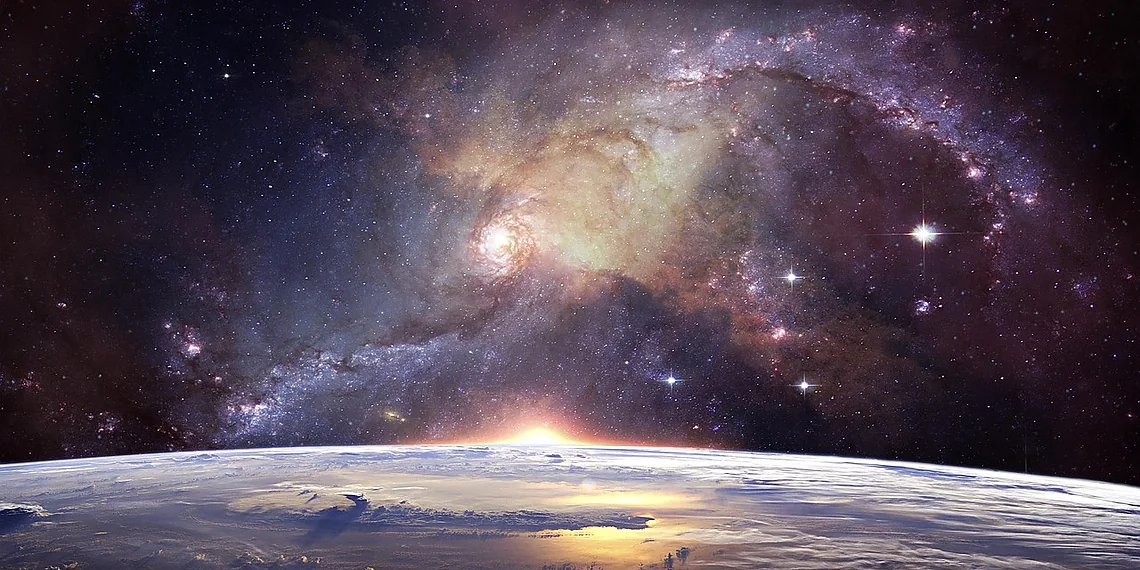
What made these early universe stars so monstrous? Primarily their sheer size and mass. While our Sun is substantial, monster stars are theorized to have been hundreds, even thousands, of times more massive – potentially ranging from 30 to 300 solar masses or higher! This incredible bulk translated into extraordinary luminosity; they would have shone with blinding intensity, far outshining any star we see today. However, their immense mass also meant a tragically short lifespan. The rapid rate of nuclear fusion within these giants burned through their fuel at an astonishing pace, leading to explosive deaths as supernovae after only a few million years – a blink of an eye compared to the Sun’s projected 10 billion-year life.
The conditions that allowed for the formation of such colossal stars were unique to the early universe. The absence of heavier elements (what astronomers call ‘metals’) played a crucial role. Modern star formation relies on these metals to cool gas clouds, allowing them to fragment and form smaller stars. In the pristine environment of the early universe, without this cooling mechanism, gas clouds collapsed directly into much larger masses. This direct collapse led to the creation of these exceptionally massive stars, which fundamentally shaped the chemical evolution of the universe as they seeded it with heavier elements through their supernova explosions.
Contrast this with modern star formation: today’s stellar nurseries produce a wide range of star sizes, thanks to the presence of metals and more efficient cooling mechanisms. The giant gas clouds fragment into smaller pieces, leading to stars that are generally much less massive than those early universe monsters. Discovering chemical fingerprints of these primordial giants, as recently achieved with the James Webb Space Telescope, offers invaluable insights into this pivotal period in cosmic history and helps us understand how the universe transitioned from a dark age to the complex structures we see today.
Beyond Our Sun: Defining Monster Stars

Unlike the familiar stars we observe today, the ‘monster stars’ of the early universe were colossal behemoths dwarfing even the most massive stars currently known. These primordial stars are theorized to have had masses hundreds, or even thousands, of times greater than our Sun – estimates range from 30 to 300 solar masses, and potentially beyond. Their sheer size directly translated into extraordinary luminosity; they would have blazed with light intensities many millions of times brighter than the sun, making them visible across vast cosmic distances.
The extreme mass of these early stars also dictated their incredibly short lifespans. Stars generate energy through nuclear fusion, consuming fuel at a rate proportional to their mass – more massive stars burn through their hydrogen far faster. Consequently, monster stars likely existed for only a few million years, compared to the billions of years our Sun is expected to shine. This fleeting existence meant they were relatively rare and have since disappeared, leaving behind clues in the chemical composition of the early universe.
The conditions that allowed for the formation of such massive stars no longer exist today. In the early universe, lower metallicity (a scarcity of elements heavier than hydrogen and helium) meant gas clouds collapsed more readily under gravity’s pull, bypassing the typical fragmentation process that leads to smaller star formation we see now. The absence of heavy elements also reduced ‘radiative pressure,’ allowing for much denser clumps of gas to form directly into these gigantic stars.
JWST’s Chemical Clues
The James Webb Space Telescope (JWST) is revolutionizing our understanding of the early universe, and its recent findings regarding ‘monster stars’ are particularly groundbreaking. These weren’t your average twinkling lights; they were colossal stellar behemoths that existed just a few hundred million years after the Big Bang – far larger and more luminous than anything we see today. JWST isn’t directly *seeing* these long-gone stars themselves (they burned out quickly!), but instead, it’s detecting their subtle yet telling chemical legacies imprinted on the light from distant quasars.
Here’s how scientists are piecing together this cosmic puzzle: quasars – incredibly bright objects powered by supermassive black holes at the centers of galaxies – act as brilliant ‘flashlights.’ As the light from these quasars travels billions of years across vast distances to reach us, it passes through clouds of gas and dust. These clouds absorb some wavelengths of light, creating a unique ‘fingerprint’ or spectrum. By meticulously analyzing this spectral data captured by JWST’s powerful instruments, astronomers can identify specific elements present in those intervening clouds.
The key lies in the ratios of different elements, particularly oxygen. Monster stars are thought to have undergone very rapid and intense nuclear fusion, producing unusual abundances of heavier elements like oxygen. When light passes through gas enriched by these early star explosions, JWST detects subtle shifts in the absorption lines – tiny changes in the wavelengths of light that reveal specific elemental concentrations. These observed ratios significantly deviate from what we see in later generations of stars, providing strong evidence for the existence and activity of these primordial giants.
The process is akin to forensic science on a cosmic scale: scientists aren’t examining physical remains but are instead analyzing the chemical ‘evidence’ left behind by ancient stellar events. JWST’s unprecedented sensitivity allows us to probe further back in time than ever before, revealing details about the early universe and providing critical clues to understand how galaxies and stars formed in those pivotal first epochs.
Decoding the Cosmic Signature
Astronomers have long theorized about ‘monster stars’ – massive, luminous stars that existed in the early universe, significantly larger and more energetic than any stars we see today. These behemoths are thought to have played a crucial role in reionizing the universe and seeding it with heavier elements. Direct observation of these stars is impossible due to their distance and time elapsed since their existence, but scientists can now indirectly detect their presence by analyzing the light from distant quasars – incredibly bright objects powered by supermassive black holes at the centers of galaxies. The light from these quasars travels billions of years before reaching us, effectively acting as a ‘time machine’ allowing astronomers to peer into the early universe.
The key to identifying monster star activity lies in analyzing the spectral signature of this quasar light. When starlight (or quasar light) passes through gas clouds along its journey to Earth, certain elements within those clouds absorb specific wavelengths of light, leaving dark lines – absorption lines – in the spectrum. By meticulously examining these absorption lines, astronomers can determine which elements are present and, crucially, their relative abundances. The team used JWST’s exceptional sensitivity to detect subtle differences in the ratios of oxygen and other elements like carbon and nitrogen within these intervening gas clouds. These unique elemental abundance patterns, particularly an unusually high ratio of ionized oxygen compared to other elements, strongly suggests they were enriched by the explosive deaths (supernovae) of massive monster stars.
The spectral analysis process involves breaking down the quasar light into its constituent colors using a spectrograph – essentially a prism that separates light based on wavelength. JWST’s Near-Infrared Spectrograph (NIRSpec) is particularly powerful for this task, allowing astronomers to detect faint absorption lines in the infrared portion of the spectrum. By measuring the strength and position of these lines, scientists can calculate the amount of each element present in the gas cloud. The observed oxygen ratios are significantly different from what would be expected without the influence of massive, short-lived monster stars, providing compelling evidence for their existence and impact on the early universe.
Rewriting the Early Universe Timeline
The discovery of these ‘monster stars’ is forcing astronomers to seriously reconsider our timeline of the early universe. For decades, models have predicted relatively modest first-generation stars – smaller and less massive than those we see today. However, data from the James Webb Space Telescope (JWST) reveals chemical signatures indicating the existence of colossal stars, far exceeding previous estimates in terms of both size and luminosity. These weren’t just larger versions of modern stars; they were likely fundamentally different, burning through their fuel at an astonishing rate and profoundly impacting the surrounding environment.
The implications for understanding reionization are particularly significant. Reionization marks a pivotal period when the neutral hydrogen gas that filled the early universe transitioned to an ionized state – essentially making it transparent to light. Current cosmological models attribute this process largely to the collective radiation from countless smaller stars, but these new findings suggest that a relatively small number of exceptionally bright monster stars could have been responsible for much of this ionization. This shifts our understanding from a diffuse, gradual process to one potentially dominated by fewer, more powerful sources.
Furthermore, these massive early universe stars likely acted as crucial ‘seeds’ for the formation of the first galaxies. Their intense radiation and supernova explosions would have enriched the surrounding gas with heavy elements, triggering further star formation and gravitational collapse. The remnants of these exploded stars could even have formed the cores of early black holes. This means that the galaxies we observe today might owe their existence, at least in part, to the brief but impactful lives of these primordial giants – a dramatic revision to our understanding of galactic evolution.
Ultimately, the detection of these monster stars highlights the power of JWST and underscores the need for continued refinement of cosmological models. The data is challenging existing assumptions about stellar formation and early universe conditions, demanding that we revisit fundamental theories regarding reionization, galaxy genesis, and the distribution of elements in the cosmos. This discovery opens up exciting new avenues of research, promising a more nuanced and accurate picture of our universe’s infancy.
The Reionization Era & Galactic Seeds
The early universe wasn’t always as we see it today. Initially, after the Big Bang, the cosmos was filled with a neutral fog of hydrogen and helium. This era ended abruptly during what’s known as ‘reionization,’ a period when this neutral gas transformed into an ionized state – meaning electrons were stripped from atoms. Reionization is crucial because it allowed light to travel freely across vast distances, ultimately allowing us to observe the universe we see now. For decades, scientists have sought to understand precisely *how* this reionization occurred; conventional sources like quasars alone couldn’t account for the speed and intensity of the transition.
The recent discovery of chemical fingerprints suggesting the existence of ‘monster stars’ – vastly larger and more luminous than any stars we observe today – offers a compelling explanation. These early stars, potentially hundreds or even thousands of times the mass of our Sun, would have emitted tremendous amounts of ultraviolet radiation. This intense energy was capable of ionizing the surrounding hydrogen fog on a significant scale, driving the reionization process much faster than previously thought possible. The sheer number and power of these monster stars likely accelerated the transition from neutral to ionized.
Beyond their role in reionization, these massive early stars also hold promise as ‘seeds’ for the first galaxies. When they reached the end of their short, violent lives – exploding as supernovae – they would have dispersed heavy elements into space. This enriched material could then collapse under gravity, forming the building blocks of future galaxies. The remnants of these monster stars might even have formed black holes that served as galactic nuclei, influencing the evolution and structure of early galaxies. Further observations with instruments like JWST are expected to reveal more about their distribution and impact.
Future Frontiers & Unanswered Questions
While the recent JWST observations have provided an unprecedented glimpse into the era of early universe stars, a vast landscape of unanswered questions remains. Future research will heavily focus on refining our understanding of these ‘monster stars’ – how massive were they truly? Current models suggest sizes exceeding 100 times the mass of our Sun, but direct measurement is incredibly challenging due to their short lifespans and rapid evolution. Next-generation observatories like the Extremely Large Telescope (ELT) will be crucial; its sheer light-gathering power promises to probe even fainter signals from these distant behemoths, potentially resolving finer details in their spectra and allowing for more precise mass estimations.
A key area of investigation revolves around the chemical enrichment of the early universe. These massive stars, burning through their fuel at an astonishing rate, ended their lives as supernovae, scattering heavy elements – those beyond hydrogen and helium – into the surrounding cosmos. JWST’s data provides hints about these enrichment processes, but we need to understand *how* efficiently these elements were distributed. Did they form pristine ‘second-generation’ stars? Were there complex feedback mechanisms that influenced galaxy formation in the early universe? The Roman Space Telescope’s wide-field infrared surveys will be vital for mapping this chemical evolution across vast cosmic distances.
Looking further ahead, a truly revolutionary discovery could come from searching for gravitational wave signals emitted by these monster stars. If particularly massive stars formed binaries or even merged, the resulting gravitational waves would offer an entirely new window into their dynamics and internal structure – something completely inaccessible through light-based observations. While current detectors are not sensitive enough to directly observe such events from the early universe, advancements in detector technology could potentially unlock this avenue of research. Imagine detecting the echoes of stars that existed just a few hundred million years after the Big Bang!
Ultimately, understanding these early universe stars is critical for piecing together the complete story of cosmic evolution. They were not merely isolated objects; they were likely pivotal drivers in shaping galaxies and seeding the conditions necessary for planets – and potentially life – to emerge later on. Continued observations, combined with increasingly sophisticated theoretical models, hold the promise of unveiling even more profound secrets about our universe’s infancy and our place within it.
The sheer scale of these monster stars, far exceeding anything we observe today, fundamentally reshapes our models of galactic formation and evolution in the cosmos’ infancy. Discovering their existence provides crucial insights into how heavier elements were initially dispersed throughout the universe, seeding subsequent generations of stars and planets – a process previously shrouded in mystery. These colossal beacons illuminate an era when conditions were radically different, offering unprecedented data points to refine our understanding of dark matter’s role and the physics governing extreme stellar environments. The detection of these early universe stars is not just about finding bigger stars; it’s about rewriting chapters of cosmic history, revealing a previously unseen epoch of intense activity and rapid change. Future observations promise even more detailed characterization, allowing us to probe the internal structures of these giants and further constrain the parameters that governed their formation. The James Webb Space Telescope continues to be an invaluable tool in this quest, consistently pushing the boundaries of what we can observe and learn about our universe’s origins. To delve deeper into these extraordinary discoveries and witness firsthand the stunning images captured by JWST, we invite you to explore its website – a portal to ongoing exploration and scientific breakthroughs that will undoubtedly continue to redefine our place within the vastness of space.
You can find a wealth of information, including detailed mission updates and breathtaking imagery, at [JWST Website Address – Replace with actual URL].
Continue reading on ByteTrending:
Discover more tech insights on ByteTrending ByteTrending.
Discover more from ByteTrending
Subscribe to get the latest posts sent to your email.