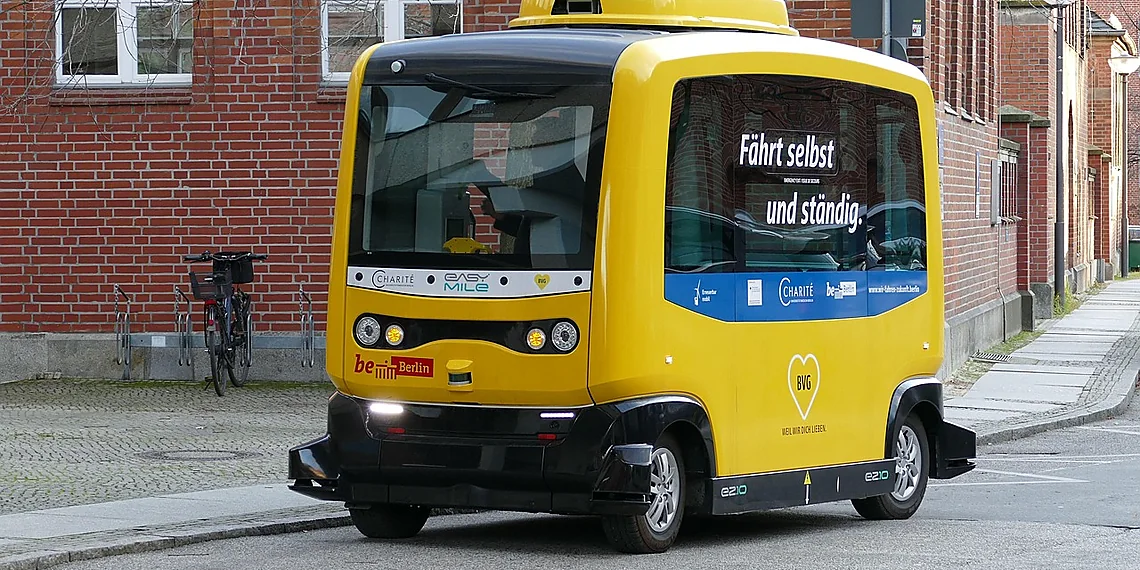


The relentless pursuit of safer and more reliable transportation is driving incredible innovation in artificial intelligence, particularly within the realm of autonomous systems.
However, deploying these complex technologies responsibly demands far more than just impressive demonstrations; it requires a rigorous understanding of their limitations and potential failure points.
A key challenge lies in ensuring that training datasets accurately reflect the vast spectrum of real-world conditions an autonomous vehicle or robot might encounter – from unexpected weather events to unpredictable pedestrian behavior.
Insufficiently representative data can lead to overconfidence and, crucially, safety risks when these systems are faced with scenarios they haven’t adequately ‘seen’ before. It’s a problem that directly impacts public trust and the widespread adoption of this transformative technology. This is why evaluating dataset representativeness is paramount for validating any system designed for real-world operation. A new paper tackles this difficulty head-on, offering a novel approach to address it effectively. The research introduces a probabilistic method specifically designed to quantify how well a scenario suite represents the true operational conditions, even when those conditions are inherently uncertain. This advance provides a valuable tool for developers striving to build safer and more trustworthy autonomous systems.
The Representativeness Problem in Autonomous Driving
The performance of autonomous systems, particularly self-driving cars, hinges on the quality and representativeness of the data they’re trained upon. It’s not enough to simply gather lots of driving footage; that footage must accurately reflect the conditions in which the vehicle is *expected* to operate safely. This ‘representativeness problem’ is a critical challenge for ensuring AV safety and reliability, and it directly impacts how well these systems perform in real-world situations.
To understand this challenge, we need to define two key concepts: the Operational Design Domain (ODD) and the Target Operational Domain (TOD). The ODD describes the specific conditions under which an autonomous system is *designed* to function safely – think of it as its ‘comfort zone.’ This includes factors like road type (highway vs. city street), weather conditions (sunny, rainy, snowy), lighting (daytime, nighttime), and even traffic density. The TOD represents the broader range of conditions the vehicle *might* encounter during operation, which may extend beyond the ODD but still require safe handling. A self-driving car designed to operate only on well-lit highways has a narrow ODD; its TOD might include slightly less ideal highway conditions or even brief stints on city streets.
The danger arises when training data fails to adequately represent either the ODD or TOD. Imagine a dataset primarily composed of sunny day driving footage. If that car is then deployed in an area with frequent heavy rain, it may struggle to perceive its environment accurately and react appropriately – potentially leading to accidents. Similarly, if the TOD includes complex intersections with unpredictable pedestrian behavior but the training data lacks sufficient examples of such scenarios, the autonomous system will be ill-equipped to handle them safely. In essence, a lack of representativeness creates blind spots in the system’s understanding of the world.
Addressing this representativeness problem is paramount for building trustworthy and safe autonomous systems. Researchers are actively developing methods – like the probabilistic approach mentioned in the paper – to quantify how well training data reflects real-world scenarios and identify gaps that need to be filled. Ultimately, ensuring a high degree of dataset representativeness is not just about improving performance; it’s about safeguarding lives.
Why Data Matters: Operational Design Domains (ODDs) & Target Operational Domains (TODs)

Autonomous systems, particularly self-driving cars, are only as good as the data they’re trained on. A critical concept in ensuring their safe operation is understanding ‘representativeness’ – how well a dataset reflects the real-world conditions the vehicle will encounter. To clarify this, we use two key terms: Operational Design Domain (ODD) and Target Operational Domain (TOD). The ODD defines the specific conditions under which an autonomous system *is designed to operate safely*. Think of it as a set of boundaries – speed limits, weather conditions, road types, time of day, even pedestrian behavior patterns. A vehicle’s ODD might specify operation only on well-lit highways during clear weather.
The Target Operational Domain (TOD), on the other hand, describes the *broader range* of situations an autonomous system is expected to handle – even if it’s not explicitly designed for them. This includes conditions outside the comfort zone of the ODD. For example, a self-driving car might be expected to navigate city streets with cyclists and pedestrians, even though its initial design focused on highways. The difference between the ODD and TOD highlights the challenge: we want systems that can *gracefully degrade* in situations they weren’t specifically trained for.
Imagine an autonomous system primarily trained on data from sunny California highways. If deployed in a region with frequent snow, poorly marked roads, and unpredictable driver behavior (a scenario outside its ODD and potentially far from its TOD), it could experience dangerous failures – misinterpreting lane markings, failing to detect pedestrians obscured by snow, or reacting inappropriately to sudden maneuvers. This underscores the importance of datasets that accurately represent both the intended operational environment (ODD) and the broader spectrum of potential conditions (TOD). Insufficient representation leads to overconfidence in situations where the system is actually vulnerable.
Introducing Uncertainty-Aware Representativeness Measurement
Traditional methods for assessing scenario representativeness often rely on a single score to quantify how well training or testing data reflect real-world operational conditions (the Operational Design Domain, or ODD). However, this approach falls short when dealing with complex autonomous systems like self-driving cars. The reality is that the TOD – what an autonomous system *might* encounter – is rarely perfectly known and often involves considerable uncertainty. A single representativeness score can mask crucial variations and potentially lead to overconfidence in a system’s safety, particularly if the data used for evaluation isn’t truly representative of all possible scenarios.
To address this limitation, our research introduces an uncertainty-aware representativeness measurement method based on probabilistic principles. Instead of providing a single number, we calculate a *distribution* of potential representativeness scores. This distribution reflects the range of plausible values given our current knowledge and acknowledges the inherent uncertainties in defining the TOD. Imagine evaluating a self-driving car’s ability to handle rain – a simple score might say ‘80% representative,’ but our method would show you a range, perhaps from 65% to 95%, highlighting the potential impact of varying rainfall intensities.
At its core, we employ an imprecise Bayesian approach. This allows us to incorporate prior knowledge about the TOD – what we *expect* to see – even when data is scarce. Think of it as starting with a reasonable guess and then refining that guess as more data becomes available. The ‘imprecise’ aspect is critical; instead of assuming a precise prior, we allow for a range of possibilities, reflecting our uncertainty about the true TOD distribution. This robust handling of limited data and uncertain priors makes our method particularly valuable in situations where comprehensive datasets are unavailable or difficult to obtain.
Ultimately, this probabilistic framework moves beyond simplistic representativeness scores, offering a more nuanced and informative assessment of how well autonomous systems’ training data aligns with their intended operational environment. By explicitly quantifying uncertainty, we empower engineers and safety assessors to make more informed decisions about system deployment and ongoing monitoring, contributing to safer and more trustworthy autonomous systems.
Probabilistic Approach: Handling Data Scarcity & Prior Uncertainty
Traditional methods for assessing scenario representativeness often produce a single, definitive score, implying a level of certainty that rarely exists in real-world autonomous systems development. The reality is that we frequently deal with limited data – especially when considering rare but critical scenarios within the Target Operational Domain (TOD) – and inherent uncertainty about what those TOD conditions actually entail. Imagine trying to predict all possible weather conditions an autonomous vehicle might face; complete knowledge is impossible, so a single ‘representativeness’ number becomes misleading.
To address these limitations, researchers are exploring probabilistic approaches rooted in Bayesian methods. This technique moves away from providing a fixed score and instead offers a *distribution* of representativeness values, reflecting the range of plausible scenarios based on available data and prior assumptions. Think of it as acknowledging ‘we’re reasonably confident representativeness is somewhere between X and Y,’ rather than stating definitively ‘representativeness equals Z.’ This distribution visually communicates the confidence level associated with the assessment.
A key advantage of this Bayesian probabilistic method is its ability to incorporate prior knowledge, even when data is scarce. Prior knowledge represents existing beliefs about the TOD before observing any new scenario data – for example, knowing that heavy rain events are more common in certain regions during specific seasons. These priors are combined with observed data to refine the representativeness assessment, providing a more robust and informative evaluation, particularly useful for situations where training data is limited or biased.
How it Works: A Numerical Example
Let’s illustrate how our representativeness measurement works with a simplified numerical example. Imagine we’re evaluating an autonomous systems application – say, a self-driving car – and want to ensure its training data adequately reflects the conditions it will encounter on real roads. We break down operational scenarios into categories: weather (sunny, rainy, snowy), road type (highway, city street, rural road), and time of day (morning, afternoon, evening). Each scenario suite represents a collection of simulated or recorded driving situations.
To begin, we analyze the distribution of these categories within both the training dataset and our inferred Target Operational Domain (TOD) – essentially, what we *expect* the car to face. For instance, if the training data contains 70% sunny days, 20% rainy days, and 10% snowy days, while the TOD suggests a distribution of 50% sunny, 30% rainy, and 20% snowy, we immediately see a difference. Our method doesn’t just say “unrepresentative”; it assigns an interval-valued representativeness score for each category (e.g., ‘weather – sunny: [0.7, 0.9]’). This range acknowledges the inherent uncertainty in our TOD estimate and provides a more nuanced understanding than a single point value.
Consider another example: road type. The training data might heavily feature highway driving (60%), with smaller proportions of city streets (30%) and rural roads (10%). However, if the TOD indicates that the car will operate in a mix – 40% highway, 40% city street, and 20% rural road – we see a significant skew. The representativeness score for ‘road type – highway’ might be [0.3, 0.6], reflecting the over-representation in training compared to expectation, while ‘road type – rural’ could show a lower score like [0.1, 0.4] due to under-representation. These scores are calculated based on statistical comparisons and adjusted for the uncertainty surrounding both datasets.
By systematically comparing these category distributions – weather, road type, time of day, and potentially many more – our method provides a comprehensive view of scenario representativeness. This allows engineers to identify gaps in training data, prioritize data collection efforts (e.g., focusing on snowy conditions or rural roads), and ultimately build more robust and trustworthy autonomous systems that can handle the complexities of real-world operation.
Comparing Scenario Suites & Inferred TODs: Category by Category
To illustrate how our representativeness assessment works, let’s consider a scenario suite designed for autonomous vehicle testing. This suite includes scenarios categorized by weather conditions: sunny, rainy, snowy, and foggy. We also have a ‘Target Operational Domain’ (TOD) – what we expect the AV to realistically encounter. Imagine the TOD indicates that 60% of driving will be in sunny conditions, 25% in rain, 10% in snow, and 5% in fog. Our method compares the distribution of scenarios within our test suite against this target.
We don’t simply compare raw counts; instead, we assign interval-valued representativeness scores to each weather category. For example, if our scenario suite has 80 sunny scenarios out of a total of 100, that suggests good representation for sunny conditions. However, if it only contains 5 snowy scenarios, this indicates significantly underrepresented snow conditions. These scores aren’t absolute ‘yes/no’ judgments; they are ranges reflecting the uncertainty inherent in both the TOD and the scenario suite’s composition.
Critically, we apply this category-by-category comparison across various operational factors – weather is just one example. We could similarly compare road types (highway vs. city street), time of day (day vs. night), or other relevant features. The resulting representativeness scores for each category provide a detailed picture of where the scenario suite excels and where it might be lacking, guiding data augmentation or refinement efforts to better align with the intended operational environment.
Future Directions & Implications

The ability to accurately measure scenario representativeness holds significant implications for the future development and deployment of autonomous systems. Currently, validating these systems relies heavily on extensive simulations and real-world testing, processes that are both time-consuming and resource intensive. Our proposed probabilistic method offers a pathway towards more efficient and data-driven validation by providing a quantifiable metric to assess how well training datasets reflect the anticipated operational environment – effectively bridging the gap between simulated scenarios and actual deployment conditions. This allows engineers to proactively identify gaps in their dataset coverage, leading to safer and more robust autonomous systems across diverse applications beyond just self-driving vehicles.
Looking ahead, this approach could revolutionize how we design and evaluate autonomous agents. Imagine a future where developers can rapidly prototype new algorithms and instantly assess their performance against a defined ODD or TOD using our representativeness metric. This accelerates the iterative development cycle and reduces the risk of unexpected failures when deployed in complex real-world scenarios. Furthermore, it facilitates more targeted data collection efforts – focusing on areas where representativeness is lacking rather than relying solely on broad, potentially inefficient data acquisition strategies.
Despite its promise, our method isn’t without limitations. A key challenge lies in accurately defining and characterizing the TOD or ODD itself. This requires a deep understanding of the intended operational environment, which can be difficult to fully capture with discrete features. Furthermore, the effectiveness of the probabilistic comparison depends on the quality and accuracy of the feature encoding process; biases introduced during this stage could skew the representativeness score. Future research should focus on developing techniques for more robust TOD/ODD definition and exploring alternative feature representations that better capture the nuances of real-world scenarios.
Finally, extending this work to incorporate dynamic environmental factors – such as weather conditions, traffic patterns, or even unexpected events – represents a crucial avenue for future exploration. Currently, our method primarily focuses on static scenario features. Integrating temporal dependencies and adaptive learning capabilities would significantly enhance its ability to assess representativeness in truly complex and evolving operational domains, ultimately contributing towards building more reliable and trustworthy autonomous systems.
The journey through scenario representativeness highlights a critical, often overlooked, element in the development of robust autonomous capabilities. We’ve demonstrated that simply amassing vast datasets isn’t enough; what truly matters is how accurately those datasets reflect the unpredictable realities faced by deployed systems. Embracing uncertainty-aware measurement techniques offers a powerful pathway to quantify this representativeness and proactively identify gaps before they lead to real-world failures, significantly bolstering overall safety profiles. The methods discussed provide a framework for moving beyond superficial dataset evaluations towards a more nuanced understanding of performance limitations. Ultimately, achieving reliable operation demands a shift in focus – not just toward algorithmic innovation, but also towards meticulous data curation and rigorous validation processes. As we strive for increasingly sophisticated autonomous systems, ensuring the quality and representativeness of training data becomes paramount. This isn’t merely an academic exercise; it’s a fundamental requirement for building trustworthy and dependable solutions across various industries. To delve deeper into this evolving landscape and explore how to build more reliable applications powered by data-centric AI, we encourage you to investigate resources on data-centric AI and its vital role in constructing trustworthy autonomous systems.
The future of safe and efficient mobility, manufacturing, and countless other sectors hinges on our ability to create truly dependable autonomous systems. By prioritizing dataset representativeness and adopting uncertainty quantification techniques, we can actively mitigate risks and accelerate progress towards that goal. The insights presented here offer a tangible roadmap for engineers and researchers alike – a pathway toward more resilient designs and increased confidence in deployed solutions. Ignoring these considerations carries significant consequences; embracing them unlocks the full potential of AI to positively impact our world.
Continue reading on ByteTrending:
Discover more tech insights on ByteTrending ByteTrending.
Discover more from ByteTrending
Subscribe to get the latest posts sent to your email.