

Imagine peering back in time, not just to witness the first stars igniting, but to observe vast reservoirs of gas swirling around the nascent building blocks of galaxies. That’s precisely what astronomers are now doing, unveiling previously unseen structures that offer unprecedented glimpses into the universe’s infancy. Recent observations have revealed colossal clouds of gas, far more extensive than initially predicted, lurking within regions destined to become massive galactic hubs.
These aren’t just pretty pictures; they represent a pivotal moment in cosmic history. The way matter coalesced and formed the large-scale structures we see today – from individual galaxies to sprawling galaxy groups – is intimately linked to the distribution and behavior of this primordial gas. Studying these formations allows us to test and refine our models of how the universe evolved.
A particularly exciting discovery centers around what we’re calling ‘early galaxy clusters,’ areas where multiple galaxies are already beginning to congregate, enveloped by these enormous gaseous halos. Understanding the properties of this gas – its temperature, density, and chemical composition – provides crucial clues about the gravitational forces at play and how quickly structures formed in the early universe. It’s like having a blueprint for cosmic construction.
The implications extend far beyond simply adding details to our understanding of the past; these observations challenge existing theories and open up new avenues of research into dark matter’s role, feedback mechanisms from supermassive black holes, and the overall timeline of structure formation. The universe is constantly revealing its secrets, and this latest find promises a deeper appreciation for the complexity and beauty of cosmic evolution.
The SPT2349 Discovery: A Glimpse Back in Time
The discovery of hot gas within the galaxy cluster SPT2349−56 represents a monumental leap forward in our understanding of how massive structures formed in the early universe. Designated SPT2349, this cluster isn’t just far away; it’s incredibly distant, boasting a redshift of z=4.3. This seemingly technical number translates to an astonishing look back in time – we are observing SPT2349 as it existed roughly 13 billion years ago, less than 2 billion years after the Big Bang. The detection of intracluster gas within such an ancient and distant environment offers unprecedented insights into the conditions that prevailed during the universe’s formative era.
What sets SPT2349 apart is its surprisingly robust hot gas reservoir. Typically, at these early epochs, clusters are expected to be more chaotic, with gas easily escaping due to gravitational instabilities or interactions between galaxies. The fact that this cluster retains such a significant amount of hot gas suggests either exceptionally efficient cooling mechanisms were at play during its formation, or the initial conditions leading to its assembly were significantly different than previously theorized. This challenges existing models and prompts researchers to re-evaluate how early galaxy clusters came together.
The Atacama Large Millimeter/submillimeter Array (ALMA) was instrumental in this groundbreaking detection. ALMA’s exceptional sensitivity allowed scientists to observe the faint emission from carbon monoxide molecules within the hot gas, providing a direct measurement of its temperature and density. This data provides crucial constraints on the physical processes governing cluster evolution at high redshift, allowing for more refined simulations and theoretical models aimed at recreating these early cosmic environments.
What is SPT2349? A Distant Cluster
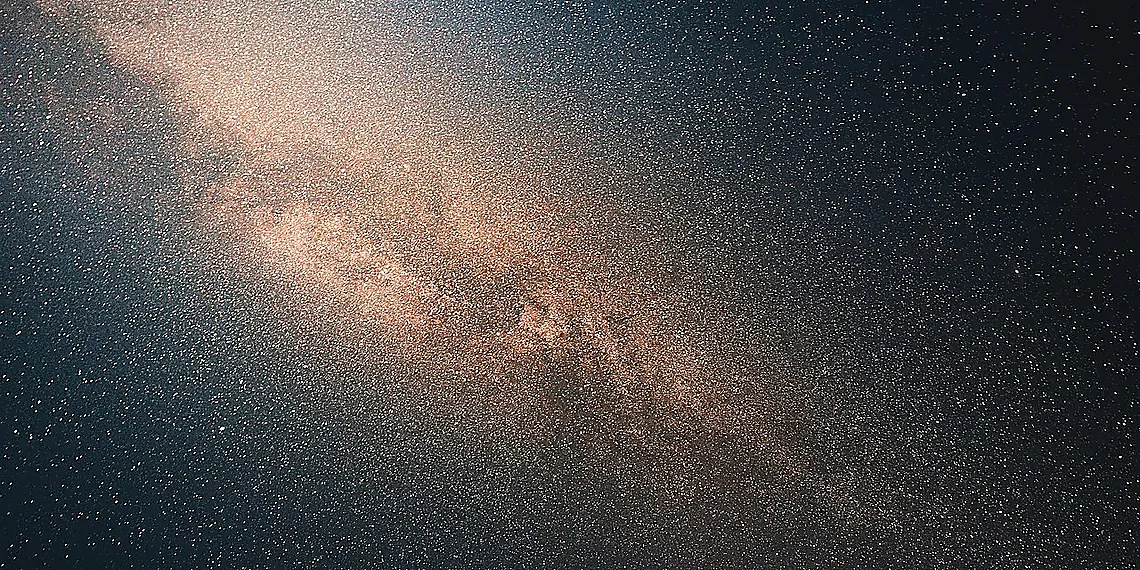
SPT2349, short for the South Pole Telescope 2349-56, is a remarkably distant galaxy cluster located approximately 13 billion light-years away from Earth. Its designation refers to its coordinates in the sky as observed by the South Pole Telescope. Identifying and studying such distant objects is incredibly challenging, requiring powerful telescopes and sophisticated analysis techniques.
The redshift of SPT2349 is measured at z=4.3. Redshift is a crucial value in astronomy; it quantifies how much the light from an object has been stretched due to the expansion of the universe as it travels towards us. A redshift of 4.3 indicates that we are observing SPT2349 as it existed just 1.3 billion years after the Big Bang – a period when the universe was still in its infancy.
What makes SPT2349 particularly significant is precisely this immense distance. Observing galaxy clusters at such high redshifts (meaning very early in cosmic history) provides an unprecedented opportunity to study how these massive structures formed and evolved during the universe’s formative years. The recent detection of intracluster gas within SPT2349 offers a unique window into these processes.
Unveiling the Hot Gas: The Sunyaev–Zel’dovich Effect
Imagine a vast, invisible ocean of hot gas swirling between galaxies within what will eventually become massive galaxy clusters – these are the ‘early galaxy clusters’ astronomers have been striving to understand better. Directly seeing this gas is incredibly difficult; it’s too faint and diffuse for traditional telescopes. Luckily, scientists have developed a clever technique called the Sunyaev–Zel’dovich (SZ) effect, which acts like an indirect detective tool allowing us to map its presence even across immense cosmic distances.
The SZ effect hinges on a fascinating interaction between photons – particles of light – and hot gas. Think of it this way: as light from distant galaxies travels towards Earth, it passes through these clouds of extremely hot gas (millions of degrees!). This hot gas alters the energy of those photons slightly; they either gain or lose a tiny bit of energy depending on their wavelength. It’s like a subtle shift in the color of light – a change so minuscule that we can’t see it visually, but which can be measured with incredibly precise instruments.
This ‘color shift,’ known as spectral distortion, is unique to the hot gas itself and isn’t caused by anything else along the line of sight. It allows astronomers to determine not only *that* the hot gas exists, but also its temperature and density – essentially creating a map of this invisible material. The Atacama Large Millimeter/submillimeter Array (ALMA) recently made groundbreaking observations using the SZ effect to study SPT2349-56, providing unprecedented detail about early galaxy cluster formation.
Essentially, the SZ effect turns ordinary light from distant galaxies into a cosmic echo of the hot gas it passes through. While complex in its physics, this technique provides an invaluable window into the universe’s earliest structures and allows us to study how these ‘early galaxy clusters’ formed and evolved over billions of years – something that would be impossible with traditional methods.
Decoding Cosmic Echoes: How SZ Works

Imagine shining a flashlight at a fog bank. The light doesn’t bounce back directly; instead, some of its energy is absorbed by the water droplets and then re-emitted as slightly lower-energy light – it appears subtly dimmer than expected. The Sunyaev–Zel’dovich (SZ) effect works similarly with hot gas in galaxy clusters, but instead of fog droplets, we’re dealing with incredibly hot electrons. These electrons are so energetic that they distort the Cosmic Microwave Background (CMB), which is leftover radiation from the Big Bang – think of it as a faint afterglow permeating the entire universe.
Galaxy clusters aren’t just collections of galaxies; they also contain vast amounts of extremely hot gas, often millions of degrees Celsius. This gas isn’t visible with traditional telescopes because it doesn’t emit light we can easily see. However, as CMB photons pass through this hot gas, they interact with the electrons and gain a tiny bit of energy. This slight change in energy shifts the CMB spectrum – a subtle dimming in one color range and a brightening in another. By carefully measuring these minute changes in the CMB, scientists can map out the distribution of this hidden hot gas.
Essentially, the SZ effect allows astronomers to ‘see’ the presence of hot gas even when it’s too faint or far away to observe directly. It’s like using a very sensitive instrument to detect the subtle distortions caused by something invisible interacting with background radiation. This technique is crucial for studying early galaxy clusters – those forming in the universe’s infancy – because it provides a way to probe their structure and evolution without relying on visible light.
Implications for Early Universe Structure
The discovery of hot intracluster gas in SPT2349−56, observed with ALMA, fundamentally reshapes our understanding of how early galaxy clusters coalesced in the infant universe. Prior models often envisioned a more gradual, relatively quiescent formation process for these massive structures. This new observation, however, suggests that cluster assembly at this epoch – roughly 10 billion years ago – was likely far more dynamic and violent than previously thought. The sheer presence of such abundant, hot gas indicates rapid accretion and mergers occurring within the protocluster environment, challenging the notion of a slow build-up from smaller halos.
Specifically, the properties of this gas—its temperature, density, and distribution—offer crucial clues about the underlying dark matter halo that seeded its formation. Simulations have long predicted the existence of these early structures, but directly observing their baryonic components has been exceptionally difficult. The detected gas provides a tangible link between the invisible gravitational scaffolding of dark matter and the visible material that would eventually form galaxies within those clusters. This strengthens our ability to map out the distribution of both dark and ordinary (baryonic) matter in the early universe, allowing for more precise tests of cosmological models.
Furthermore, this finding has implications for how we understand the interplay between star formation and gas cooling within these nascent galaxy clusters. The hot gas needs to cool down sufficiently to allow stars to form, a process that is heavily influenced by factors like feedback from active galactic nuclei (AGN). Observing this gas in such an early stage allows us to probe conditions before significant AGN activity could have impacted the cluster environment, offering a unique window into the initial stages of star formation within these structures. It helps constrain models of how efficiently baryonic matter converted into stars and galaxies during that critical period.
Ultimately, the detection of intracluster gas in SPT2349−56 serves as a powerful confirmation—and refinement—of our theoretical frameworks for galaxy cluster evolution. While it doesn’t invalidate existing models entirely, it highlights the need to incorporate more rapid accretion and merger events into simulations of early universe structure formation. Future observations targeting similar high-redshift systems will be crucial to further validate these findings and paint a more complete picture of how the cosmic web evolved from its earliest stages.
Building Blocks of Galaxies: What We’ve Learned
The recent detection of hot intracluster gas within SPT2349-56, an extremely distant galaxy cluster observed at a redshift of approximately 7, offers unprecedented insight into the conditions prevalent during the universe’s infancy. This gas, primarily composed of ionized hydrogen and helium, provides a direct probe of the environment surrounding early galaxies, allowing astronomers to study the processes that drove their assembly. Prior observations were limited by sensitivity; this discovery demonstrates that such structures existed much earlier than previously thought, pushing back the timeline for cluster formation.
The presence and distribution of this gas are intimately linked to the underlying gravitational scaffolding provided by dark matter. Simulations have long predicted the existence of these hot gas reservoirs in early galaxy clusters, but direct observation confirms their significance. The observed density and temperature profiles of the gas reveal a surprisingly smooth distribution, suggesting a coherent, large-scale structure formed relatively quickly after the Big Bang. This challenges some models that posited more fragmented, chaotic initial conditions for cluster formation.
Furthermore, studying this early intracluster gas allows us to better understand the interplay between dark matter and baryonic (ordinary) matter. The gas’s temperature is influenced by both gravitational potential wells created by dark matter halos and the energy released from star formation within galaxies. By analyzing the gas’s properties, researchers can constrain models of how efficiently baryons cooled and condensed onto these dark matter structures, providing crucial data to refine our understanding of galaxy cluster evolution and the distribution of matter throughout the early universe.
Future Frontiers in Cosmic Observation
The groundbreaking detection of hot intracluster gas in SPT2349-56 represents a pivotal moment in our understanding of early galaxy clusters, but it’s just the beginning. This discovery lays a solid foundation for even more ambitious future observations that promise to unveil the universe’s earliest structures with unprecedented clarity. Currently, limitations in telescope sensitivity and resolution restrict us from probing deeper into cosmic time; however, the next generation of instruments are poised to dramatically expand our observational window.
One particularly exciting development is the anticipated advancement of facilities like the Next Generation ALMA (ngALMA). ngALMA will boast a significantly enhanced array size and improved receiver technology compared to its predecessor. This upgrade will allow astronomers to detect far fainter signals from even more distant, and therefore younger, galaxy clusters – potentially pushing observations back to within just a few hundred million years after the Big Bang. Imagine being able to witness the very first stages of these colossal structures coalescing!
Beyond ngALMA, space-based observatories like the proposed Origins Space Telescope are also crucial for future research. Operating above Earth’s atmospheric interference, Origins will be exquisitely sensitive to millimeter and submillimeter wavelengths – precisely the frequencies emitted by intracluster gas. This capability will enable scientists to map the distribution of this gas with remarkable precision across vast cosmic distances, offering unparalleled insights into the processes driving early galaxy cluster formation and evolution.
Ultimately, these future frontiers in cosmic observation aren’t just about seeing farther; they’re about fundamentally changing our understanding of how galaxies and their environments formed. By combining observations from multiple telescopes – ground-based and space-based – we can build a more complete picture of the universe’s infancy, refining our cosmological models and potentially uncovering entirely new physical phenomena that shape the cosmos.
Next-Generation Telescopes: The Promise Ahead
The recent detection of hot intracluster gas in SPT2349-56 using ALMA marks a pivotal moment in understanding early galaxy cluster formation. However, current instruments are limited in their ability to probe even earlier epochs. Future generations of telescopes promise significantly enhanced sensitivity and resolution, allowing astronomers to observe fainter and more distant gas clouds – the very building blocks of these massive cosmic structures.
Next-generation ALMA, incorporating upgraded receivers and expanded array configurations, will be a key instrument for this endeavor. Its increased capabilities will enable us to detect the faint emission lines from carbon monoxide (CO) and other molecules within these early gas clouds. These observations provide crucial insights into the star formation rates and chemical composition of galaxies during the epoch of reionization, revealing how they coalesced to form galaxy clusters.
Beyond ALMA, planned facilities like the Extremely Large Telescope (ELT) and its associated mid-infrared instruments will also play a vital role. The ELT’s unprecedented light-gathering power will allow for direct observations of dust-obscured star formation within these early cluster environments, complementing the millimeter-wave data from ALMA and providing a more complete picture of their evolution.
The detection of these vast cosmic gas clouds represents a monumental leap forward in our understanding of the universe’s formative years.
By identifying this previously unseen material, we are gaining unprecedented insights into the processes that fueled the growth of galaxies and their eventual aggregation into structures like early galaxy clusters.
These observations provide crucial evidence supporting current cosmological models while simultaneously opening up new avenues for investigation and potential refinements to our theories about dark matter distribution and gas dynamics in the infant universe.
The sheer scale of these clouds, coupled with their unexpectedly high temperatures, challenges existing assumptions and necessitates a deeper exploration of the physics governing this epoch – a period when the cosmos was still actively assembling itself into the familiar landscape we observe today. Further study promises to unveil even more secrets about how the first stars and galaxies formed and evolved within these nascent structures, including early galaxy clusters that served as gravitational anchors for surrounding matter. The implications extend beyond just understanding the past; they refine our comprehension of the fundamental forces shaping the universe’s evolution over billions of years. It’s truly an exciting time to be involved in astrophysics and cosmology! We are only scratching the surface of what these discoveries might reveal about the very origins of everything around us, so stay tuned for more breakthroughs as researchers continue their investigations using advanced telescopes and sophisticated simulations. If you’ve been captivated by this glimpse into the cosmos’s infancy, we strongly encourage you to delve deeper into the fascinating world of cosmology – explore resources from NASA, ESA, and leading universities to expand your knowledge about dark energy, inflation, and other groundbreaking concepts shaping our understanding of the universe.
Continue reading on ByteTrending:
Discover more tech insights on ByteTrending ByteTrending.
Discover more from ByteTrending
Subscribe to get the latest posts sent to your email.